Est.2016
→
∞
Performance Marketing Automation: Rules, Triggers, and Budget Optimization
automation

Performance marketing has always been driven by data. But in today’s environment, data alone is not enough. Campaigns move fast, competition is intense, and manual decision-making often struggles to keep up.
Marketers are expected to monitor multiple campaigns, adjust budgets, test creatives, and optimize performance in real time. Doing all of this manually is not just inefficient; it often leads to missed opportunities.
This is where performance marketing automation becomes essential. By using rules, triggers, and intelligent budget allocation, businesses can create systems that respond instantly to performance signals. Instead of reacting late, you are always a step ahead.
Why Manual Campaign Management Falls Behind
Most marketing teams still rely on manual checks to manage campaigns. They log into ad platforms, review performance metrics, and make adjustments based on what they see.
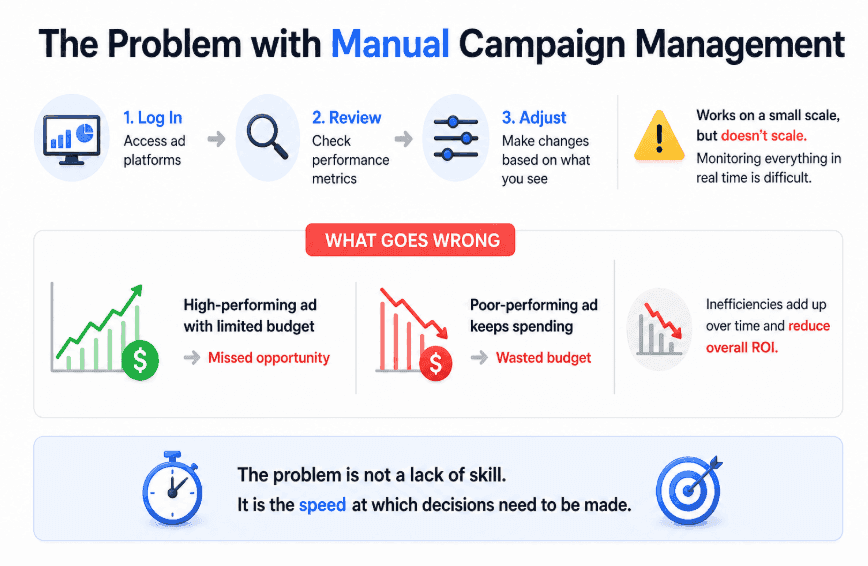
While this approach works on a small scale, it quickly becomes a limitation as campaigns grow. Monitoring everything in real time is difficult, and delays in action can impact results.
For example, a high-performing ad might continue running with a limited budget, while a poor-performing one keeps spending unnecessarily. These inefficiencies add up over time and reduce overall return on investment.
The problem is not a lack of skill. It is the speed at which decisions need to be made.
What Performance Marketing Automation Actually Does
Automation brings structure and speed to campaign management. Instead of manually adjusting settings, you define rules and conditions that guide how your campaigns behave.
These rules are based on performance metrics such as cost per acquisition, click-through rate, conversion rate, or return on ad spend. When specific conditions are met, the system takes action automatically.
This could mean increasing budget on a winning campaign, pausing an underperforming ad, or shifting spend toward better-performing audiences.
The result is a system that continuously optimizes itself without constant manual intervention.
Using Rules to Maintain Control
Rules form the foundation of marketing automation. They allow you to define clear boundaries for how your campaigns should perform.
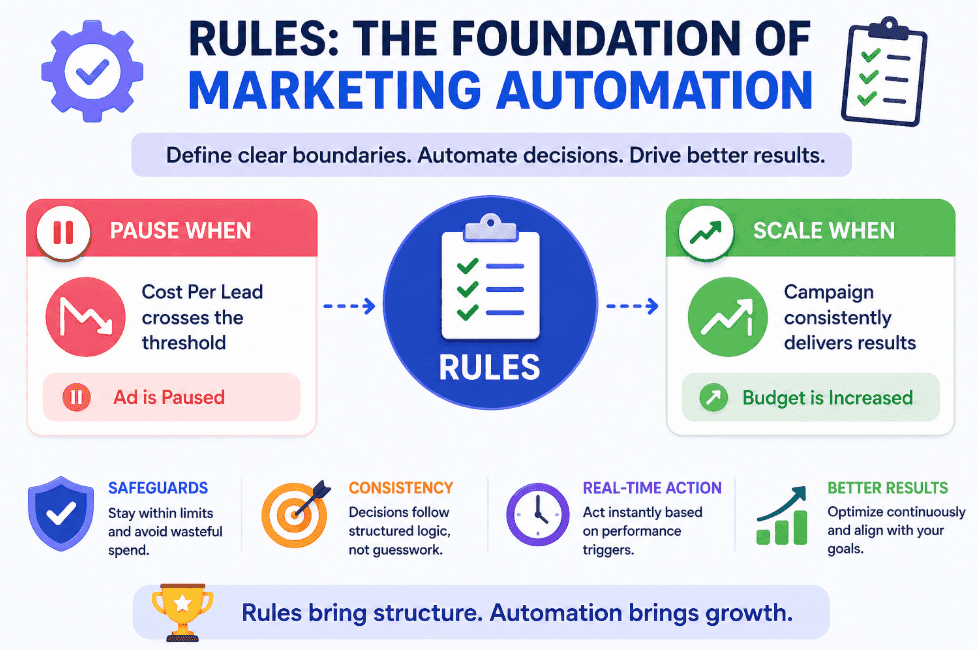
For instance, you can set a rule that pauses any ad where the cost per lead crosses a certain threshold. Similarly, you can increase the budget when a campaign consistently delivers strong results.
These rules act as safeguards. They ensure that your campaigns stay within defined limits and prevent unnecessary spending.
At the same time, they provide consistency. Decisions are no longer based on guesswork or delayed analysis. They follow a structured logic that aligns with your goals.
Triggers That Respond in Real Time
Triggers take automation a step further by enabling real-time responses.
Instead of waiting for a manual review, triggers activate actions as soon as certain conditions are met. This could be based on user behavior, performance changes, or time-based events.
For example, if a campaign starts generating a high number of conversions within a short period, a trigger can automatically increase its budget. If engagement drops suddenly, another trigger can reduce spend or pause the campaign.
This immediate response ensures that opportunities are captured and losses are minimized.
Smarter Budget Optimization
Budget allocation is one of the most critical aspects of performance marketing. Where you spend directly impacts your results.
Automation allows you to distribute budgets more intelligently. Instead of setting fixed budgets and adjusting them occasionally, you can create systems that shift spend dynamically based on performance.
High-performing campaigns receive more resources, while underperforming ones are limited or stopped. This ensures that your budget is always working toward the best possible outcome.
Over time, this approach leads to better efficiency and improved returns.
Reducing Human Error and Workload
Managing campaigns manually increases the chances of mistakes. A missed update, a delayed adjustment, or an incorrect setting can impact performance.
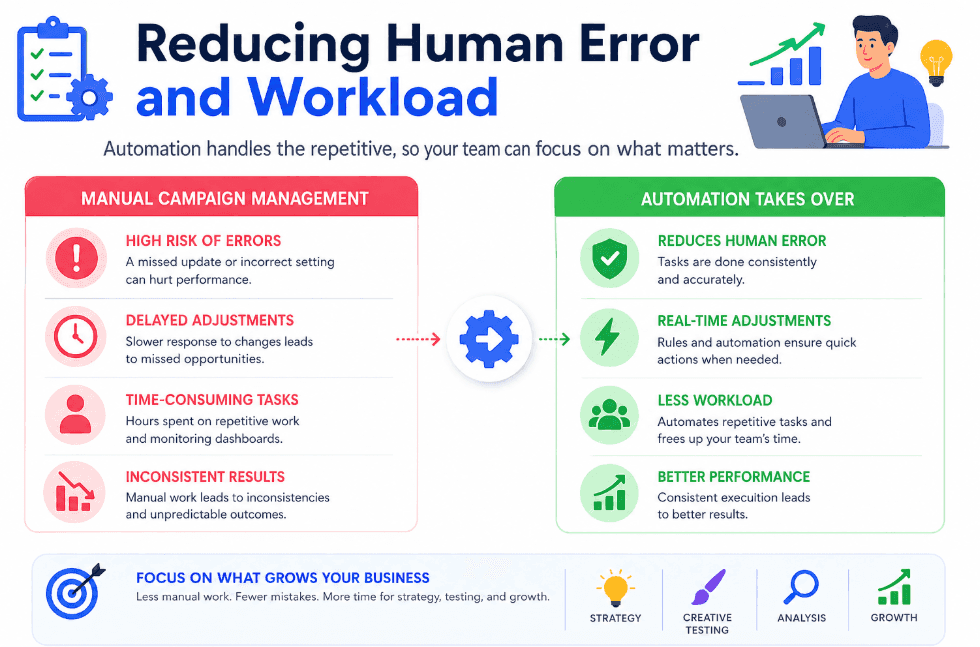
Automation reduces this risk by handling repetitive tasks consistently. It also frees up your team from routine work, allowing them to focus on strategy, creative testing, and overall campaign direction.
Instead of spending hours monitoring dashboards, marketers can spend more time improving what actually drives results.
Common Mistakes to Avoid
While automation offers clear benefits, it needs to be implemented carefully.
One common mistake is setting overly rigid rules. If conditions are too strict, campaigns may be paused too quickly or fail to scale when they should.
Another issue is a lack of monitoring. Even automated systems need periodic review to ensure they are working as intended.
It is also important to align rules and triggers with your business goals. Focusing only on short-term metrics without considering long-term value can lead to poor decisions.
A balanced approach is key.
The Impact on Marketing Performance
When automation is used effectively, the impact on performance is significant.
Campaigns become more responsive, budgets are used more efficiently, and overall results improve. At the same time, teams operate more efficiently, with less time spent on repetitive tasks.
This creates a system that supports growth without increasing complexity.
Final Thoughts
Performance marketing is no longer just about running ads. It is about managing them intelligently.
Rules, triggers, and automated budget optimization allow businesses to move faster, reduce inefficiencies, and make better use of their resources.
By building a structured system, you shift from reactive campaign management to a more proactive approach. Instead of constantly chasing performance, you create a setup where performance improves continuously.
In a competitive landscape, that level of control and efficiency can make a meaningful difference.