Est.2016
→
∞
Multi-Channel Marketing Automation: Email + WhatsApp + SMS in One Workflow
automation
Marketing today is no longer about being active on just one channel. Your audience interacts across multiple platforms, and their expectations have changed. Some people prefer email for detailed information, others respond faster on WhatsApp, and many only notice time-sensitive updates through SMS. The challenge for businesses is not just reaching people, but doing it in a way that feels connected and consistent.
This is where multi-channel marketing automation becomes powerful. Instead of managing separate campaigns on different platforms, businesses can build a unified workflow that connects email, WhatsApp, and SMS into one system. When everything is aligned, communication feels less like marketing and more like a natural conversation.
Why Single-Channel Marketing No Longer Works
Relying on a single channel, especially email, is becoming less effective over time. While email is still important, inbox competition has increased significantly. Messages get ignored, open rates fluctuate, and engagement is unpredictable. On the other hand, channels like WhatsApp and SMS have higher visibility, but they are often used without a proper strategy.
The real issue is fragmentation. When each channel operates independently, messaging becomes inconsistent. A user might receive an email that says one thing and a WhatsApp message that feels completely unrelated. In some cases, they receive repeated messages that add no value. This disconnect creates confusion and reduces trust.
To fix this, businesses need a system where all communication channels work together instead of separately.
What Multi-Channel Automation Actually Means
Multi-channel automation is not about blasting the same message across email, WhatsApp, and SMS. It is about designing a structured journey where each channel has a clear role.
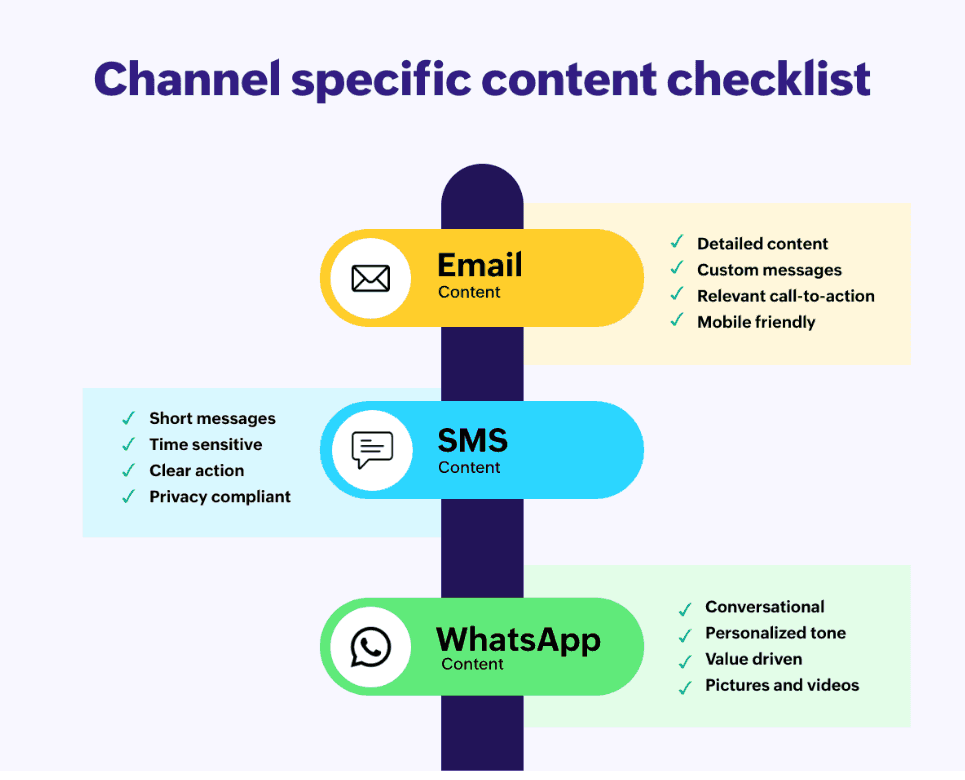
Email works well for detailed explanations, onboarding sequences, and long-form communication. WhatsApp is more conversational and ideal for quick follow-ups or real-time engagement. SMS is best used for urgent updates, reminders, or actions that require immediate attention.
When these channels are connected through a single workflow, the system can decide what to send, when to send it, and where it should go based on user behavior. This creates a much smoother experience compared to disconnected campaigns.
Building a Seamless Customer Journey
A well-designed multi-channel system feels effortless from the user’s perspective. For example, a lead might first interact with your business through a website or ad. Instead of just collecting their information and stopping there, the system immediately continues the conversation.
They might receive an email with more details about your service. If they do not engage, a follow-up on WhatsApp can bring them back into the conversation in a more direct way. If they show interest but do not take action, an SMS reminder can nudge them at the right time.
This progression does not feel forced because it mirrors how people naturally communicate across platforms. Each step builds on the previous interaction, making the journey more effective.
Personalization Across Every Channel
One of the biggest advantages of automation is the ability to personalize communication without increasing manual effort. When your system tracks user behavior and stores relevant data, it can tailor messages based on real actions.
For example, if someone clicks on a specific offer in an email, the next WhatsApp message can reference that interest directly. If a user books a call, an SMS reminder can include the exact time and details. This level of coordination makes communication feel intentional and relevant.
Instead of sending generic messages, you are creating interactions that reflect what the user actually wants.
Managing Everything Without Complexity
Handling multiple channels manually can quickly become overwhelming. Teams have to switch between platforms, track conversations, and ensure that messages are aligned. This not only consumes time but also increases the chances of errors.
A unified automation workflow removes this complexity. Everything is managed in one place, from message sequences to timing and triggers. The system handles repetitive tasks while maintaining consistency across all channels.
This also gives better visibility into performance. You can track how each channel is performing and adjust your strategy based on real data, rather than assumptions.
Avoiding Common Mistakes
While multi-channel automation offers clear advantages, poor execution can reduce its effectiveness. One of the most common mistakes is over-communication. Sending too many messages across different channels can feel intrusive and push users away.
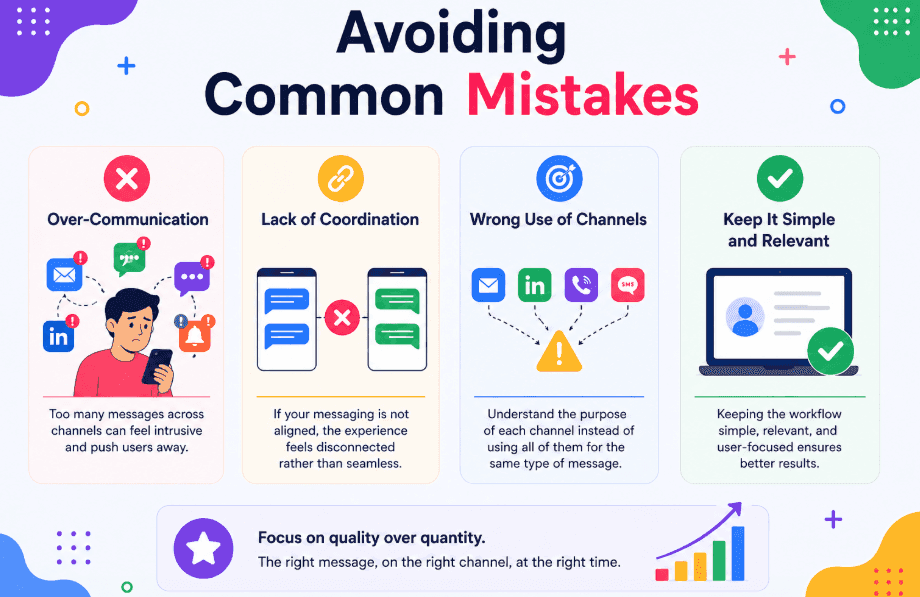
Another issue is a lack of coordination. If your messaging is not aligned, the experience feels disconnected rather than seamless. It is also important to understand the purpose of each channel instead of using all of them for the same type of message.
Keeping the workflow simple, relevant, and user-focused ensures better results.
The Bigger Impact on Growth
When your communication becomes structured and consistent, the impact on your business is noticeable. Leads are nurtured more effectively, engagement improves, and conversions increase. At the same time, your team spends less time managing repetitive tasks.
This creates a system that supports growth without adding operational pressure. Instead of running multiple disconnected campaigns, you operate one cohesive workflow that drives results across channels.
Final Thoughts
Marketing today is about creating connected experiences, not isolated interactions. Customers expect communication that feels natural, timely, and relevant, regardless of the platform.
Multi-channel marketing automation makes this possible by bringing email, WhatsApp, and SMS into one structured workflow. It ensures that every message has a purpose and every interaction moves the user forward.
When implemented correctly, it does not feel like automation. It feels like a well-managed conversation that adapts to the user at every step. And that is what truly drives engagement and conversions in a competitive environment.