Est.2016
→
∞
Fraud & Chargeback Prevention Automation: Signals, Rules, and Alerts
automation

Online businesses today deal with thousands of digital transactions every day. While online payments make shopping easier for customers, they also increase the risk of fraudulent transactions and payment disputes.
Fraud and chargebacks can create serious problems for businesses. They lead to financial losses, additional payment processing fees, and sometimes even restrictions from payment providers.
This is why many companies are adopting Fraud & Chargeback Prevention Automation: Signals, Rules, and Alerts. Automation tools help businesses detect suspicious transactions early, monitor payment activity in real time, and prevent fraud before it becomes a costly chargeback.
Instead of manually reviewing every order, automated systems continuously analyze transaction data and notify businesses when something unusual happens.
What is Fraud & Chargeback Prevention Automation?
Fraud and chargeback prevention automation is the use of automated technology to monitor transactions and identify risky behavior during the payment process.
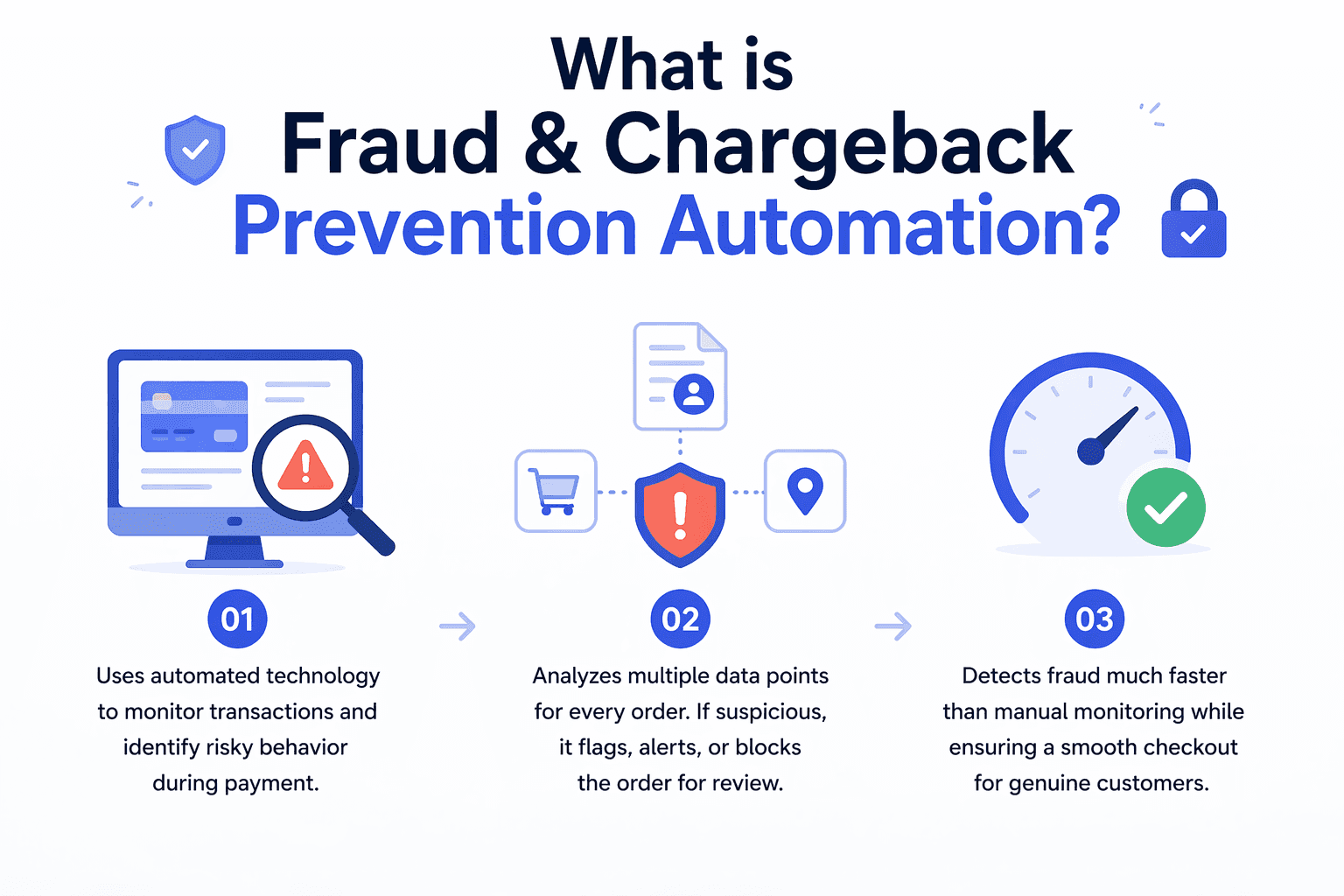
These systems analyze multiple data points for every order. If a transaction looks suspicious, the system can flag it, send an alert, or temporarily block the order until it is reviewed.
Automation allows businesses to detect fraud much faster than manual monitoring while still maintaining a smooth checkout experience for genuine customers.
Why Chargebacks Are a Serious Problem
A chargeback occurs when a customer contacts their bank to dispute a payment instead of requesting a refund from the business directly.
Chargebacks can happen for different reasons, such as:
Unauthorized transactions
Customer disputes about products or services
Billing errors or duplicate charges
For businesses, chargebacks are expensive because they often involve additional processing fees and penalties. If the chargeback rate becomes too high, payment processors may place the business under strict monitoring.
Preventing fraudulent transactions before they occur is therefore critical for maintaining healthy payment operations.
The Role of Signals in Fraud Detection
Signals are data indicators that help identify potentially suspicious activity. Automated fraud detection systems collect these signals from multiple sources and analyze them together.
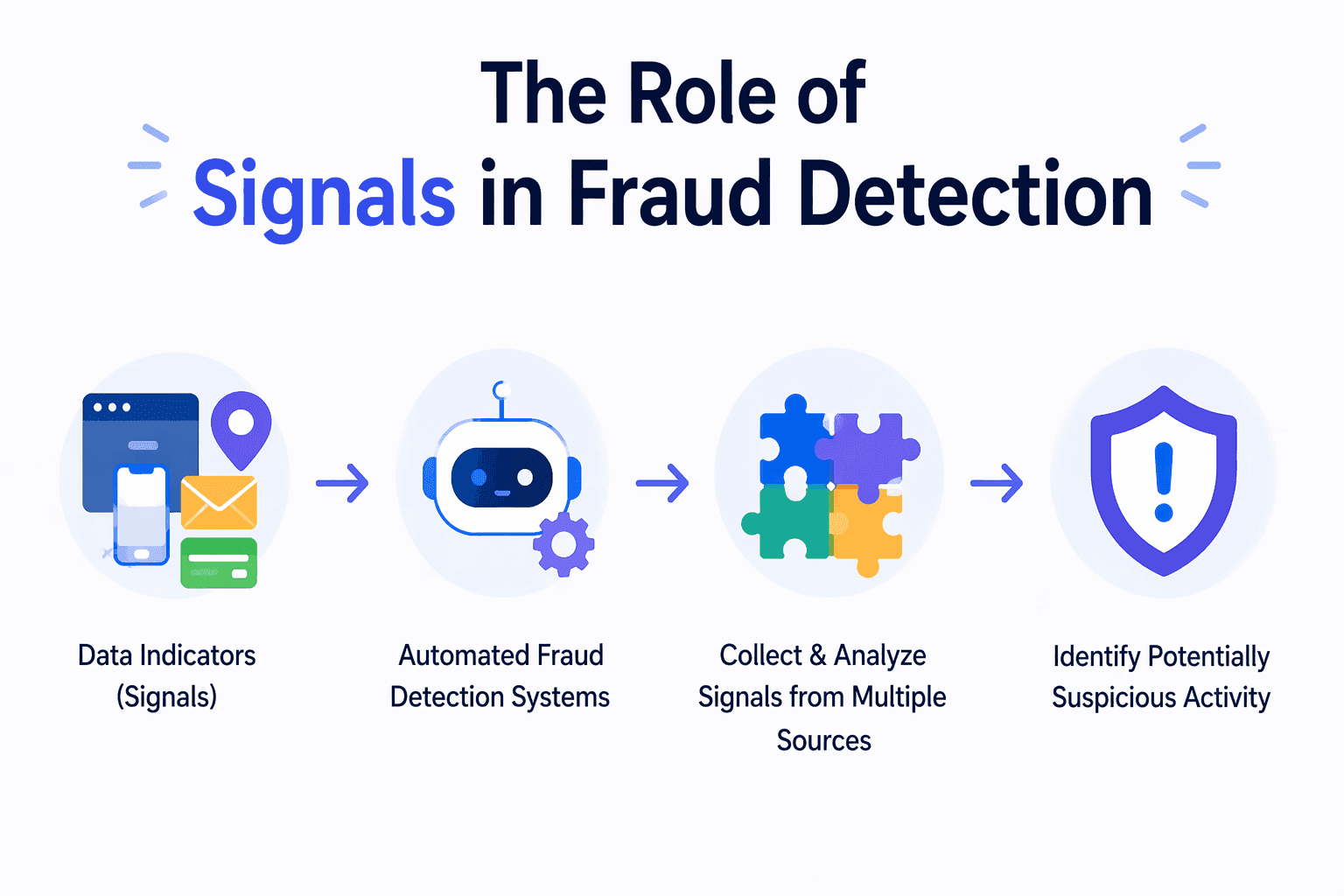
For example, signals may include unusual purchasing patterns, mismatched location information, or unexpected device behavior.
When the system detects multiple risk signals within a single transaction, it can generate a higher fraud risk score. This score helps determine whether the order should be approved, reviewed, or blocked.
How Automated Rules Help Prevent Fraud
Rules are predefined conditions that guide how the fraud prevention system reacts to suspicious activity.
Businesses can configure rules based on their risk tolerance and typical customer behavior. When a transaction meets certain conditions, the system automatically takes action.
For example, a rule might trigger a review if:
The order value is unusually high
Multiple transactions occur quickly from the same account.
The billing and shipping locations do not match.
These automated rules help detect fraud instantly without slowing down normal purchases.
Alerts and Real-Time Monitoring
Alerts play an important role in automated fraud prevention. When the system detects a suspicious transaction or pattern, it immediately notifies the relevant team.
Real-time alerts allow businesses to review high-risk orders quickly and prevent potential fraud before the transaction is completed or shipped.
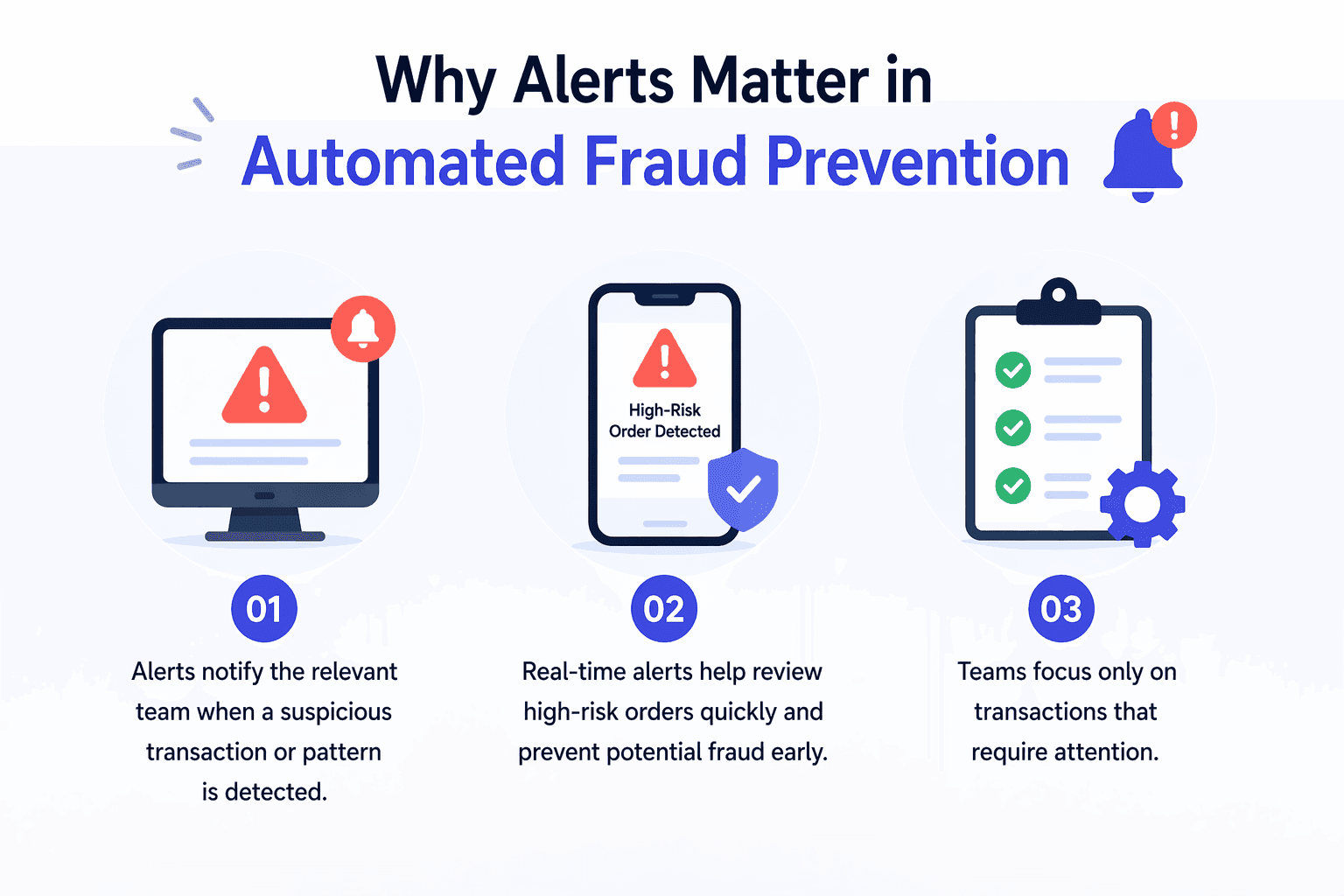
Instead of manually reviewing every order, teams can focus only on transactions that require attention.
Benefits of Automating Fraud and Chargeback Prevention
Automated fraud prevention provides several advantages for businesses managing online payments.
First, it improves fraud detection speed because systems can analyze thousands of transactions instantly. This reduces the chances of fraudulent orders slipping through.
Second, automation reduces manual workload. Teams no longer need to monitor every order manually and can focus on high-priority investigations.
Finally, preventing fraudulent transactions early helps businesses maintain lower chargeback rates and protect their payment processing relationships.
Implementing an Automated Fraud Prevention Strategy
Businesses that want to reduce fraud should begin with a structured prevention strategy.
The first step is collecting transaction data such as payment details, order value, customer behavior, and device information. This data helps identify patterns that may indicate fraud.
Next, companies should implement automated fraud detection tools that analyze signals and apply predefined rules during the checkout process.
Finally, businesses should establish an alert system so suspicious transactions can be reviewed quickly and handled appropriately.
Regular monitoring and updates are also important because fraud techniques continue to evolve.
Conclusion
Fraud and chargebacks are major risks for modern online businesses. Without proper monitoring, fraudulent transactions can lead to financial losses and operational challenges.
By adopting Fraud & Chargeback Prevention Automation: Signals, Rules, and Alerts, businesses can monitor transactions in real time, detect suspicious behavior early, and reduce chargeback risks.
Automation not only protects revenue but also helps maintain a secure and trustworthy payment experience for customers.