Est.2016
→
∞
Customer Segmentation Automation (RFM): Personalized Campaigns at Scale
automation
In today’s competitive digital marketplace, businesses can no longer rely on generic marketing campaigns to engage customers. Modern consumers expect personalized experiences that match their interests, behavior, and purchase history.
This is where Customer Segmentation Automation (RFM): Personalized Campaigns at Scale becomes an essential strategy for businesses looking to improve engagement and drive better marketing results.
RFM segmentation allows companies to divide customers into meaningful groups based on their purchasing behavior. When this process is automated, businesses can deliver highly targeted campaigns to thousands or even millions of customers without increasing manual workload.
By combining data analysis with automation, companies can create marketing campaigns that feel personal while still operating at scale.
What is Customer Segmentation Automation?
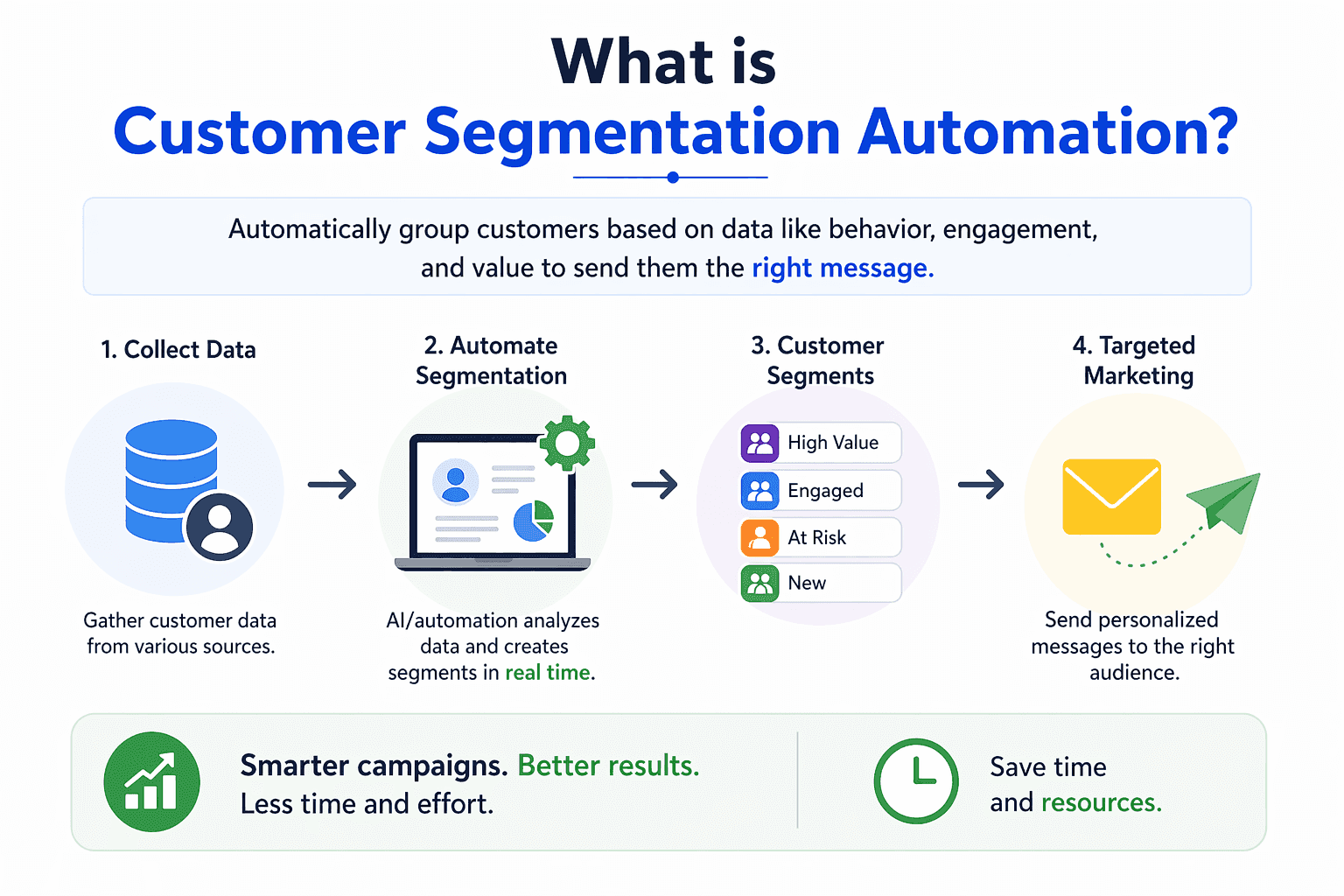
Customer Segmentation Automation refers to the process of automatically dividing customers into specific groups based on data such as purchasing habits, engagement patterns, and customer value.
Instead of sending the same marketing message to every customer, businesses use segmentation to tailor campaigns for different audiences.
Automation platforms analyze customer data continuously and update segments in real time. This ensures that marketing campaigns always target the right people with the most relevant message.
With automated segmentation, businesses can run smarter marketing campaigns while saving time and resources.
Understanding RFM Segmentation
RFM stands for Recency, Frequency, and Monetary value. It is one of the most effective methods used to analyze customer behavior.
Recency:Recency measures how recently a customer made a purchase. Customers who have purchased recently are usually more engaged and more likely to buy again.
Frequency:Frequency tracks how often a customer makes purchases. Frequent buyers tend to have stronger brand loyalty and higher lifetime value.
Monetary Value:Monetary value represents how much a customer spends.
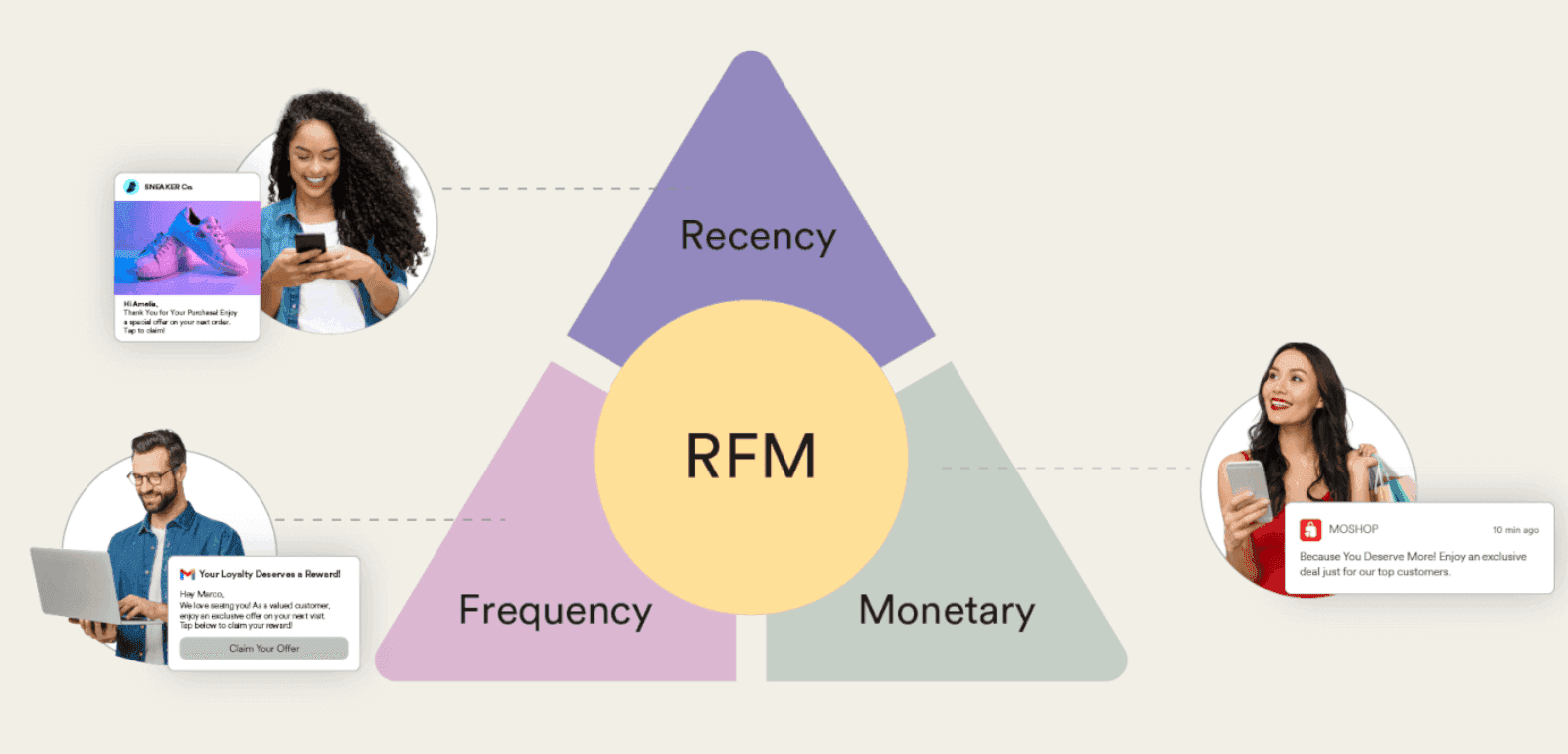
High-spending customers are often the most valuable segment for businesses.
By analyzing these three factors, businesses can identify different types of customers, such as loyal buyers, occasional shoppers, high-value customers, and inactive users.
Why Automation is Important for RFM Segmentation
Manually analyzing customer data for segmentation can become extremely difficult as businesses grow. When thousands of transactions occur daily, updating segments manually is almost impossible.
Automation solves this challenge by continuously analyzing data and updating customer segments automatically.
Whenever a customer makes a new purchase, their recency, frequency, and spending score can change. The system updates the segment instantly and adjusts marketing campaigns accordingly.
This ensures that customers always receive the most relevant communication based on their current behavior.
Creating Personalized Campaigns at Scale
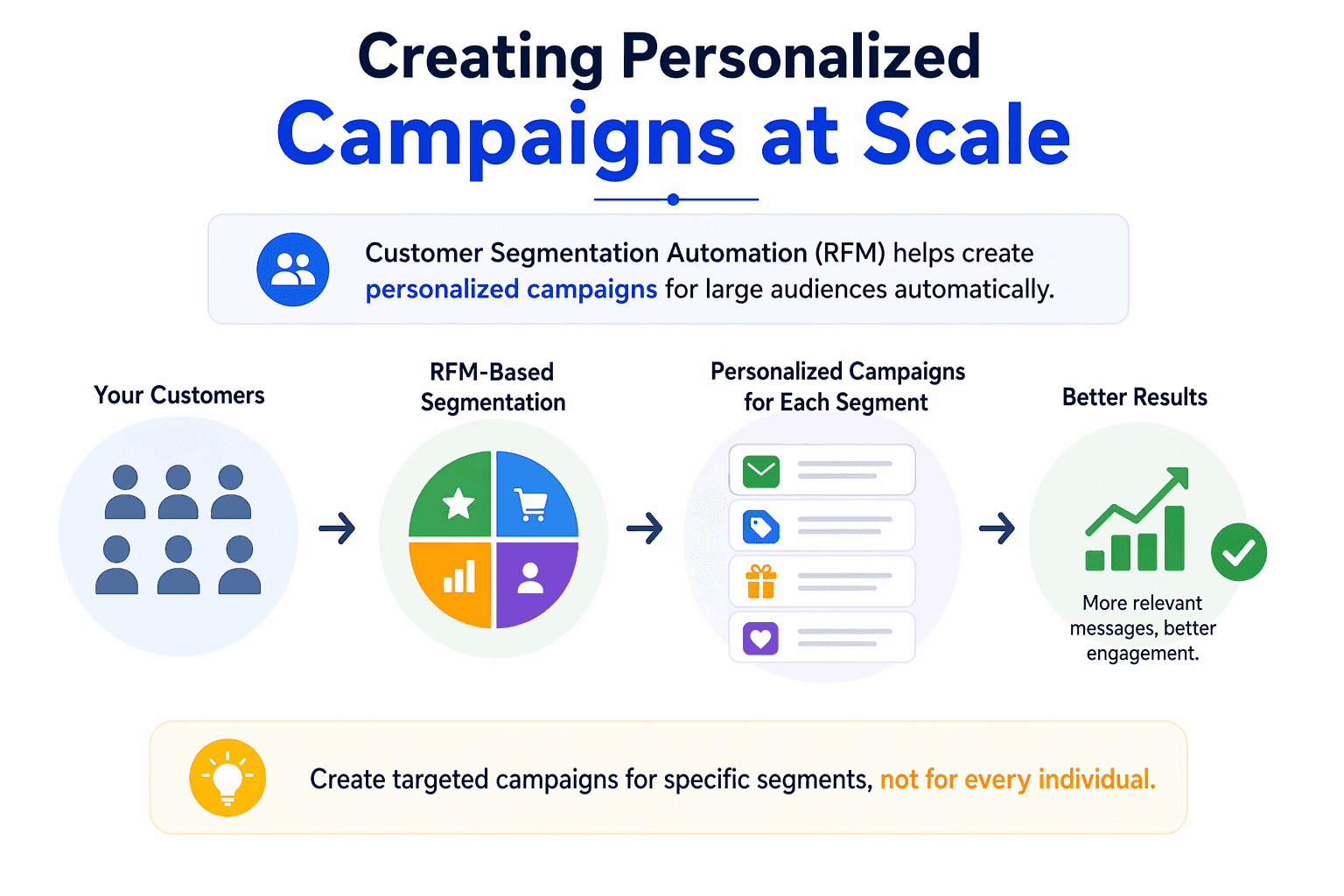
One of the biggest advantages of Customer Segmentation Automation (RFM) is the ability to create personalized campaigns for large audiences without manual effort.
Instead of designing separate campaigns for every individual customer, businesses create targeted campaigns for specific segments.
For example:
Loyal customers may receive exclusive offers or early access to new products.
High-value customers might get premium discounts or VIP rewards.
Inactive customers could receive re-engagement campaigns or special incentives.
New customers may receive welcome offers and onboarding emails.
Because the segmentation process is automated, these campaigns can run continuously without constant management.
Benefits of Customer Segmentation Automation
More Effective Marketing Campaigns:Segmented campaigns deliver more relevant messages, which improve engagement and conversion rates.
Higher Customer Retention:When customers receive personalized communication, they are more likely to remain loyal to the brand.
Better Use of Marketing Resources:Automation reduces manual analysis and allows marketing teams to focus on strategy and creativity.
Improved Customer Insights:RFM segmentation provides valuable insights into customer behavior, helping businesses understand who their most valuable customers are.
Scalable Personalization:Automation makes it possible to deliver personalized marketing experiences to thousands or millions of customers simultaneously.
Practical Use Cases of RFM Segmentation
Businesses across many industries use RFM segmentation to improve their marketing performance.
E-commerce Stores:Online retailers use RFM segmentation to identify repeat buyers and offer loyalty rewards or product recommendations.
Subscription Services:Subscription-based businesses use segmentation to identify customers who are likely to cancel and send retention campaigns.
Retail Brands:Retail brands can identify high-value shoppers and offer exclusive promotions to maintain long-term loyalty.
Digital Platforms:Apps and digital platforms use RFM analysis to re-engage inactive users and encourage them to return.
How Businesses Can Implement Customer Segmentation Automation
Implementing RFM-based automation does not require a complicated process. Businesses can start by following a few simple steps.
Collect Customer Data:Gather information such as purchase history, order value, and transaction frequency.
Calculate RFM Scores:Analyze recency, frequency, and monetary value to categorize customers into segments.
Automate Segmentation:Use marketing automation platforms or CRM systems to update customer segments automatically.
Create Targeted Campaigns:Design marketing campaigns tailored to different segments.
Continuously Optimize:Monitor campaign performance and adjust segmentation strategies to improve results.
The Future of Automated Customer Segmentation
As marketing technology evolves, customer segmentation will become even more advanced.
Future systems may combine RFM segmentation with:
Artificial intelligence for predictive analytics
Behavioral tracking across multiple channels
Real-time personalization engines
Advanced customer lifetime value modeling
These innovations will allow businesses to deliver even more accurate and impactful marketing campaigns.
Conclusion
Effective marketing is no longer about reaching the largest audience; it is about reaching the right audience with the right message.
By implementing Customer Segmentation Automation (RFM): Personalized Campaigns at Scale, businesses can better understand their customers and create highly targeted campaigns that drive engagement and sales.
Automation ensures that segmentation remains accurate and campaigns remain relevant, even as customer data continues to grow.
For businesses aiming to build stronger relationships with their customers, RFM-based automation is a powerful and scalable solution.