Est.2016
→
∞
Trial-to-Paid Automation: Event-Based Nudges That Convert
automation

Free trials are one of the most effective ways to attract users, especially for SaaS and subscription-based businesses. However, getting users to sign up is only the first step. The real difficulty lies in turning trial users into paying customers.
Many users start a trial but never fully explore the product or understand its value. Without proper engagement, they simply drop off before converting.
This is where Trial-to-Paid Automation: Event-Based Nudges That Convert becomes essential. By using automated, behavior-driven messages, businesses can guide users toward key actions and increase conversion rates without manual follow-ups.
What is Trial-to-Paid Automation?
Trial-to-paid automation is the process of using automated workflows to convert free trial users into paying customers.
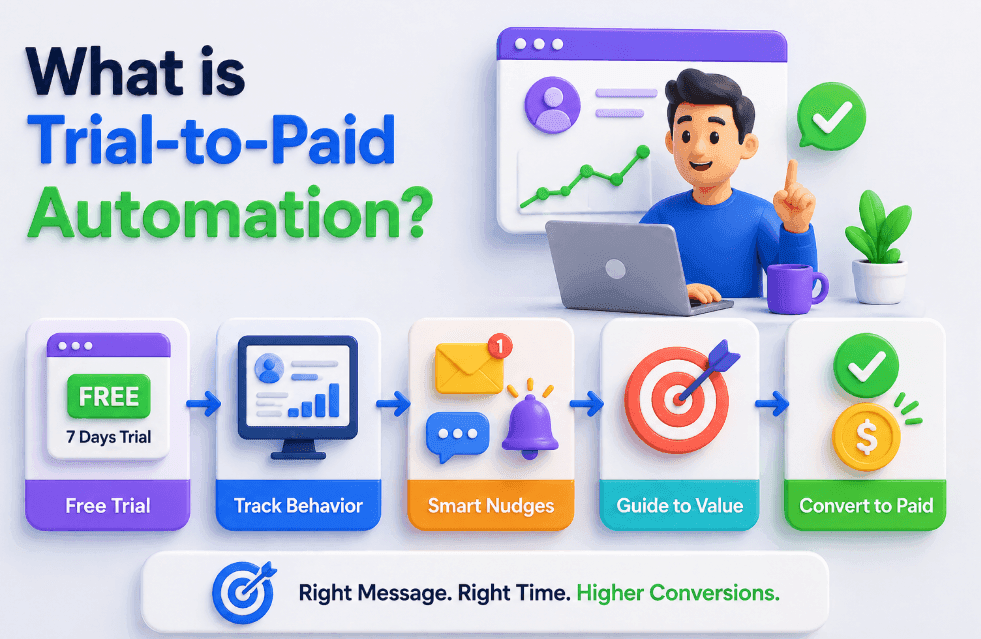
Instead of sending generic messages to all users, automation systems track user behavior and trigger specific nudges based on actions or inactivity.
These nudges can be delivered through email, in-app messages, or push notifications. The goal is to guide users toward meaningful product interactions that increase the likelihood of conversion.
Understanding Event-Based Nudges
Event-based nudges are messages triggered by specific user actions or behaviors inside the product.
These triggers can include actions such as signing up, completing a key feature, or remaining inactive for a certain period.
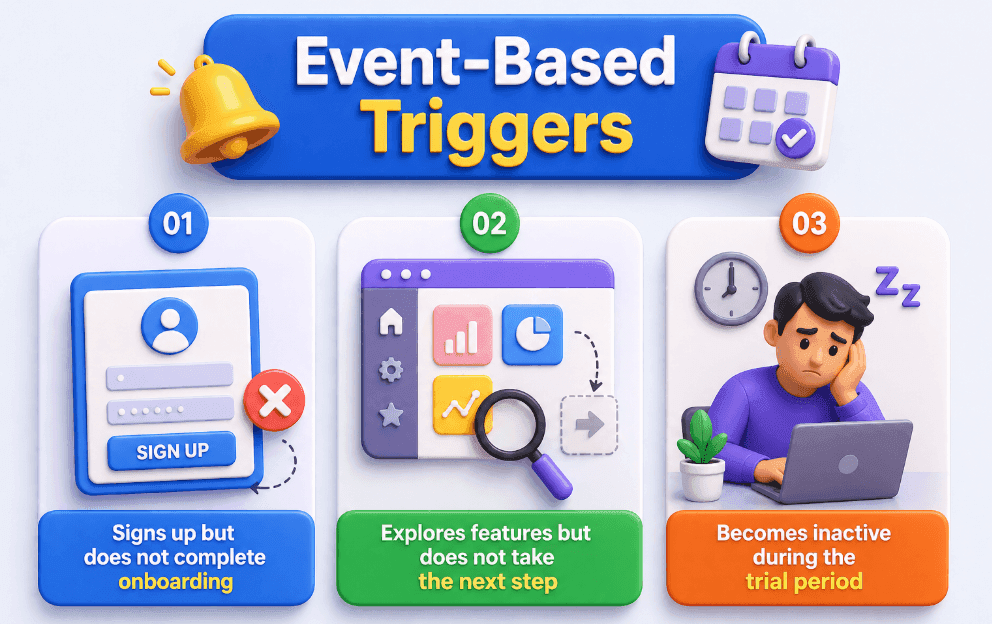
Common examples of event-based triggers include:
A user signs up but does not complete onboarding
A user explores features but does not take the next step
A user becomes inactive during the trial period
Each of these events can trigger a targeted message that encourages the user to move forward.
Why Event-Based Automation Works
Generic communication often fails because it does not match the user’s current stage in the journey. Event-based automation solves this by delivering relevant messages at the right time.
When users receive guidance based on their actions, they are more likely to engage with the product.
This approach helps in:
Improving user engagement during trials
Highlighting product value at the right moment
Reducing drop-offs before conversion
By focusing on behavior rather than assumptions, businesses can create more effective conversion strategies.
Key Types of Trial Nudges
Different types of nudges can be used to guide users toward conversion.
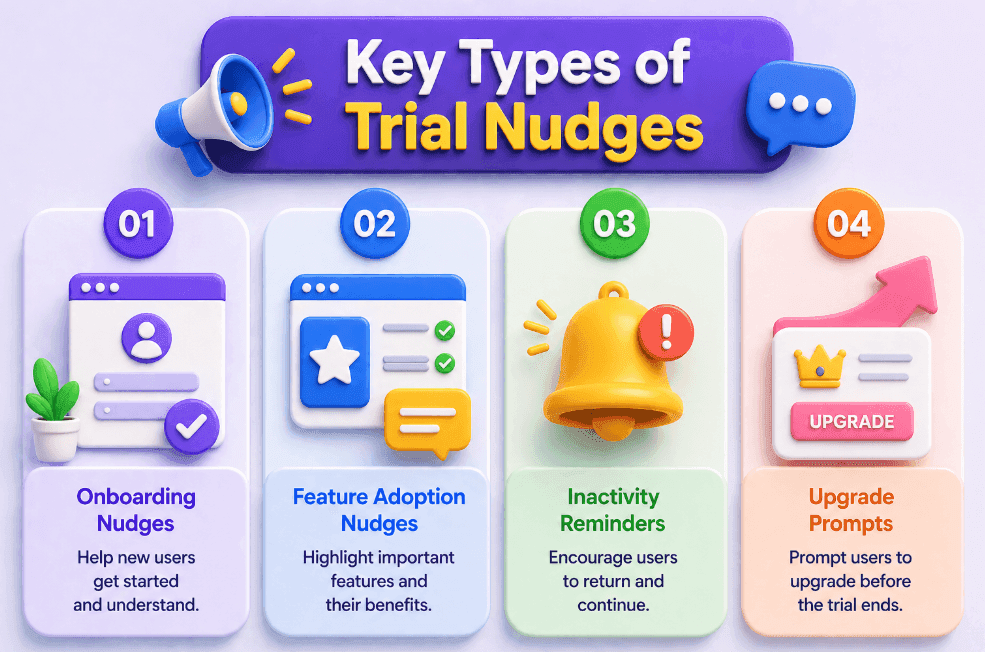
Onboarding Nudges:These messages help new users complete initial setup and understand how to use the product.
Feature Adoption Nudges:When a user has not explored important features, automation can highlight those features and explain their benefits.
Inactivity Reminders:If a user becomes inactive, a reminder can encourage them to return and continue their trial.
Upgrade Prompts:As the trial period nears its end, users can receive prompts explaining the benefits of upgrading to a paid plan.
Benefits of Trial-to-Paid Automation
Automating the conversion process offers several advantages.
First, it increases conversion rates by guiding users toward important actions during the trial.
Second, it reduces manual effort for marketing and sales teams, as communication happens automatically.
Another key benefit is personalization. Messages are based on user behavior, making them more relevant and effective.
Finally, it ensures consistent engagement across all users, regardless of scale.
Steps to Implement Trial-to-Paid Automation
Businesses can build an effective system by following a structured approach.
Start by identifying key events that indicate user intent or inactivity. These events will serve as triggers for automation.
Next, create targeted messages for each event that clearly explain what the user should do next.
Choose the right communication channels, such as email or in-app notifications, to deliver these messages.
Finally, monitor performance metrics like engagement rate and conversion rate to improve the system over time.
The Future of Trial Conversion Automation
As automation technology evolves, trial-to-paid systems are becoming more advanced. Future solutions may use predictive insights to identify users who are most likely to convert.
These systems could deliver even more personalized nudges based on real-time behavior and preferences.
Businesses that adopt these strategies early will be able to maximize the value of their trial users and improve overall growth.
Conclusion
Converting trial users into paying customers requires more than just offering a free trial. It requires timely guidance, relevant communication, and consistent engagement.
By implementing Trial-to-Paid Automation: Event-Based Nudges That Convert, businesses can deliver the right message at the right time and improve conversion rates.
Automation ensures that users stay engaged throughout the trial and clearly understand the value of upgrading.