Est.2016
→
∞
Renewal Automation: Health Scores + Renewal Reminders + Escalation Rules
automation

For subscription and SaaS businesses, renewals are just as important as new sales. Winning a customer once is valuable, but keeping them over time is what drives predictable revenue and long-term growth.
The challenge is that renewals do not happen automatically just because a contract is about to end. Many customers quietly disengage before renewal, and without proper tracking, teams may realize the risk too late.
This is where Renewal Automation: Health Scores + Renewal Reminders + Escalation Rules becomes essential. By combining data insights with automated workflows, businesses can identify risks early, engage customers at the right time, and prevent last-minute surprises.
What is Renewal Automation?
Renewal automation is the process of managing contract or subscription renewals using automated systems instead of manual tracking.
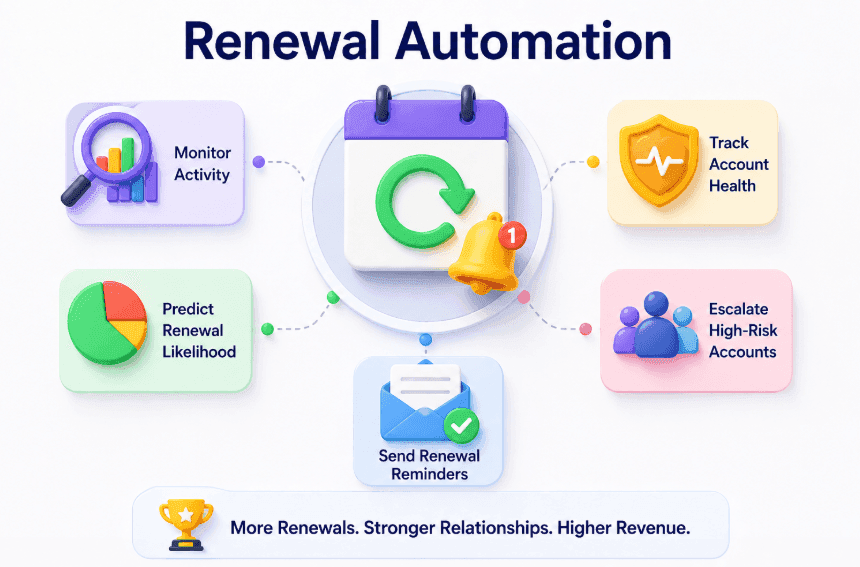
Instead of relying on spreadsheets or reminders, the system continuously monitors customer activity, predicts renewal likelihood, and triggers actions based on predefined rules.
This includes sending renewal reminders, tracking account health, and escalating high-risk accounts to the right teams.
Automation ensures that every renewal opportunity is handled proactively and consistently.
Why Renewals Are Often Missed
Many businesses lose renewals not because the product failed, but because the process was not managed properly.
Some common challenges include:
Lack of visibility into customer engagement
Late follow-ups close to the renewal date
No clear ownership of renewal accounts
When teams rely on manual processes, it becomes easy to overlook warning signs. Automation helps eliminate these gaps and ensures timely action.
Understanding Health Scores
Health scores are a key component of renewal automation. They represent how engaged and satisfied a customer is with your product.
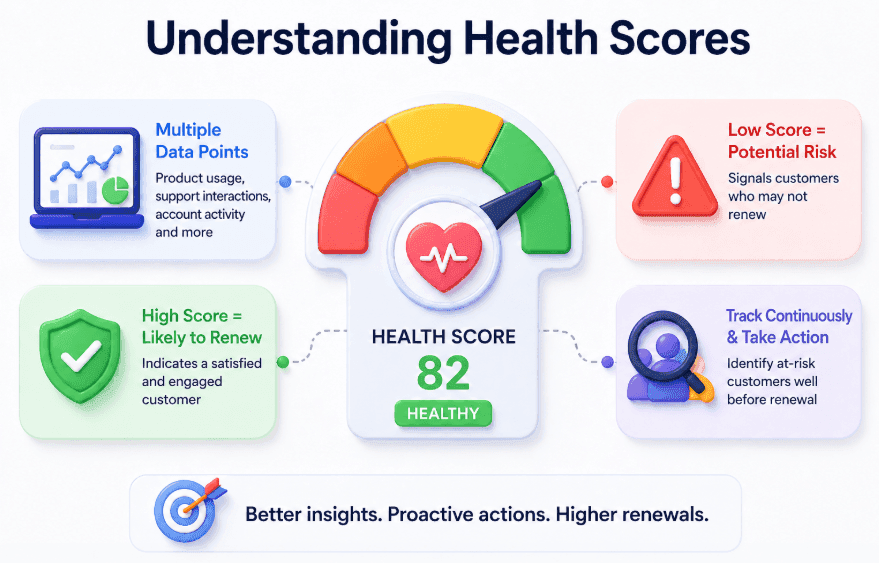
These scores are calculated using multiple data points such as product usage, support interactions, and account activity.
A high health score usually indicates a satisfied customer who is likely to renew. A low score signals potential risk.
By tracking health scores continuously, businesses can identify at-risk customers well before the renewal date.
Automating Renewal Reminders
Renewal reminders are critical for keeping both customers and internal teams informed.
Instead of manually tracking renewal dates, automation systems send reminders at predefined intervals.
These reminders can include:
Notifications sent weeks before renewal
Follow-up messages as the date approaches
Final reminders close to the deadline
This structured communication ensures that customers are aware of upcoming renewals and have enough time to take action.
Using Escalation Rules to Prevent Churn
Escalation rules add another layer of protection to the renewal process.
When a customer shows signs of risk, such as a declining health score or lack of engagement, the system can trigger an escalation.
This may involve:
Notifying account managers
Assigning the account to a senior team member
Triggering urgent follow-up actions
Escalations ensure that high-risk accounts receive immediate attention before it is too late.
Benefits of Renewal Automation
Automating the renewal process provides several important benefits.
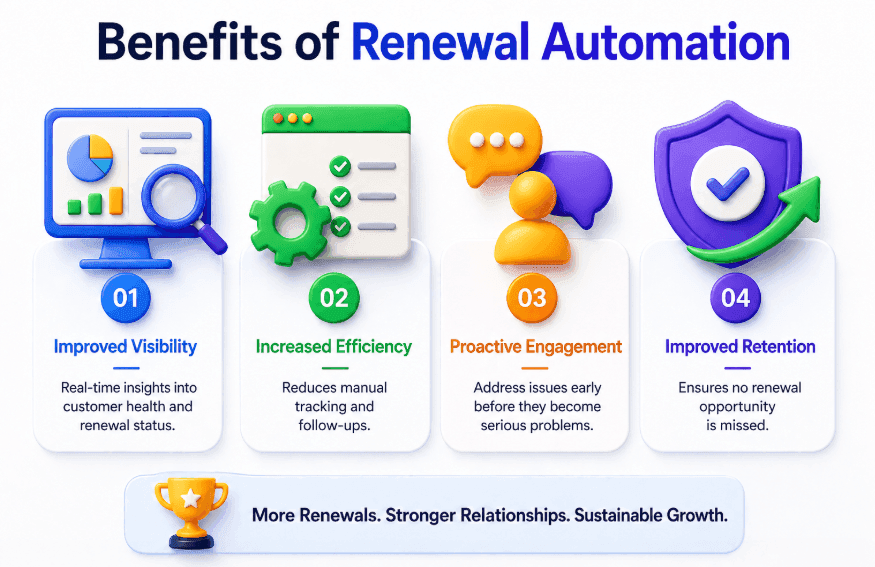
First, it improves visibility by giving teams real-time insights into customer health and renewal status.
Second, it increases efficiency by reducing manual tracking and follow-ups.
Another key benefit is proactive engagement. Teams can address issues before they become serious problems.
Finally, it improves retention by ensuring that no renewal opportunity is missed.
Steps to Implement Renewal Automation
To build an effective renewal automation system, businesses should follow a structured approach.
Start by defining the key metrics that determine customer health.
Next, create a scoring model that reflects engagement and satisfaction levels.
Set up automated reminders for upcoming renewals at different time intervals.
Then, define escalation rules for at-risk accounts based on health score thresholds.
Regularly review performance and refine the system to improve results.
The Future of Renewal Management
Renewal automation is evolving with better data analysis and predictive capabilities.
Future systems may predict renewal outcomes with high accuracy and recommend specific actions for each account.
This will allow businesses to shift from reactive renewal management to a fully proactive strategy.
Conclusion
Renewals are a critical part of sustainable business growth. Missing even a few renewal opportunities can have a significant impact on revenue.
By implementing Renewal Automation: Health Scores + Renewal Reminders + Escalation Rules, businesses can gain better visibility, act early on risks, and improve retention rates.
Automation ensures that every customer is supported throughout the renewal journey, leading to stronger relationships and consistent growth.