Est.2016
→
∞
Post-Purchase Upsell Automation: Increase Repeat Purchases Automatically
automation

Getting a new customer usually costs more than keeping an existing one, which is why businesses focus heavily on retention strategies after a purchase. That’s why smart businesses focus not just on making a sale, but also on what happens after the purchase.
Many brands miss a huge opportunity at this stage. Once a customer completes an order, they are already engaged and more likely to buy again if approached in the right way. This is where Post-Purchase Upsell Automation: Increase Repeat Purchases Automatically becomes a powerful growth strategy.
By using automation, businesses can recommend relevant products, send timely offers, and encourage repeat purchases without manual effort. This helps increase customer lifetime value and build long-term relationships.
What is Post-Purchase Upsell Automation?
Post-purchase upsell automation refers to automated marketing strategies that target customers after they have completed a purchase.
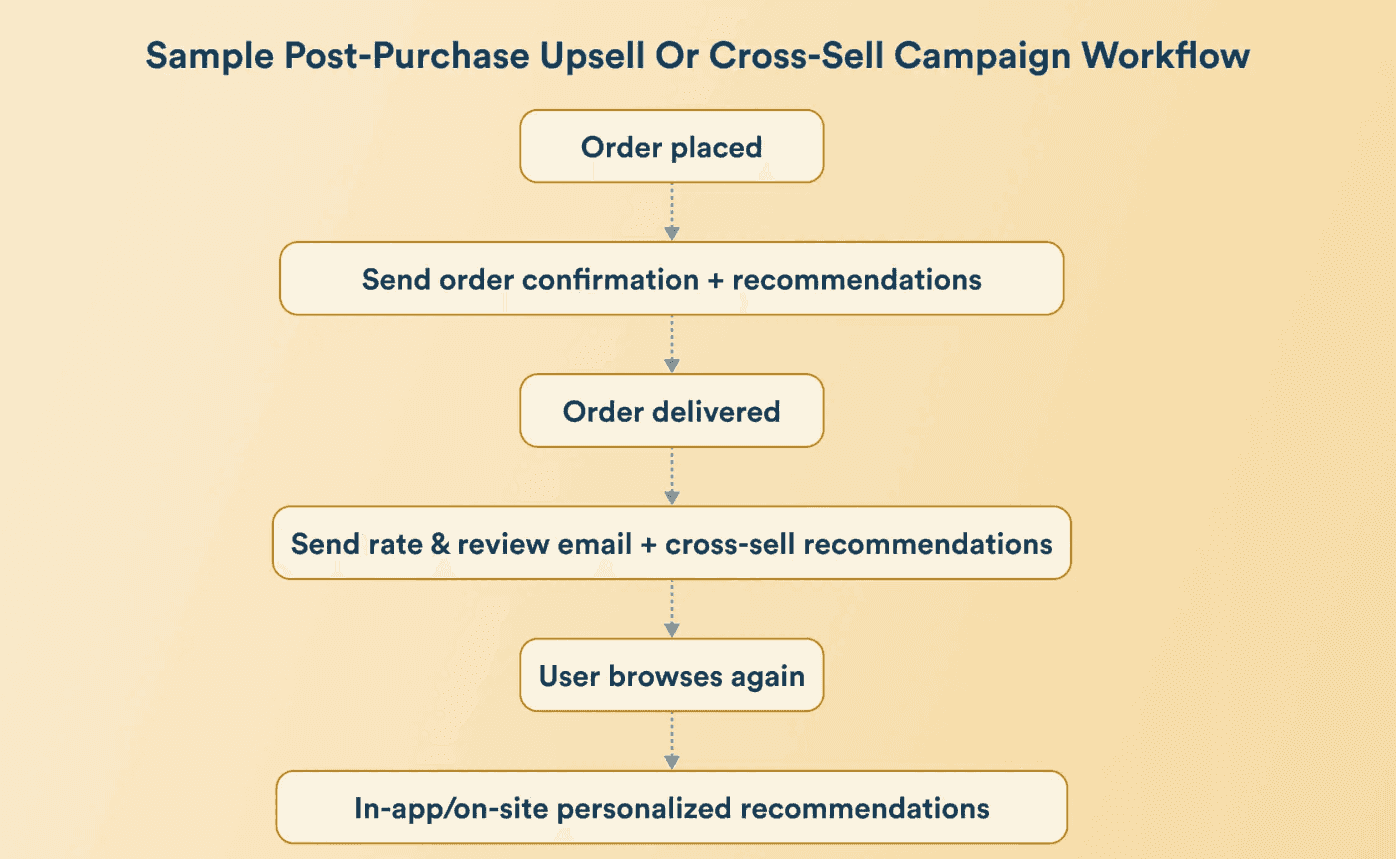
Instead of waiting for customers to return on their own, businesses actively engage them with personalized product recommendations, special offers, or complementary items.
These interactions can happen through different channels such as email, SMS, or in-app notifications. The key is timing and relevance, where messages are triggered based on customer behavior and purchase history.
Automation ensures that every customer receives these offers consistently without requiring manual follow-ups.
Why Post-Purchase Upselling Matters
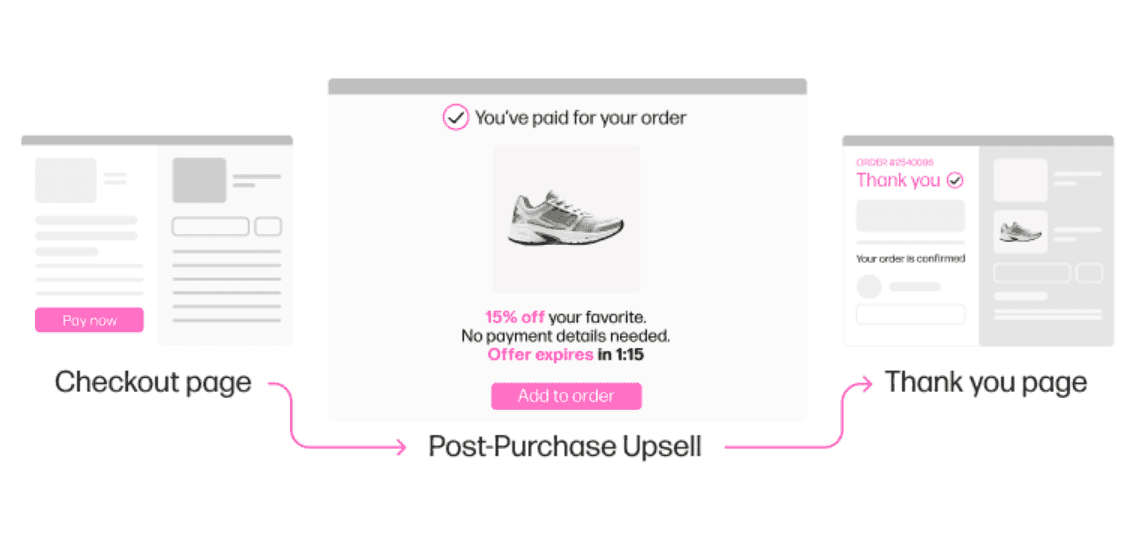
Customers who have already made a purchase are more likely to buy again compared to new visitors. They trust the brand and are familiar with the process.
Without a structured upsell strategy, businesses lose the chance to increase revenue from existing customers.
Post-purchase upselling helps in several ways:
It increases the average order value over time
It improves customer retention
It strengthens customer relationships
By offering relevant suggestions instead of random promotions, businesses can create a more personalized shopping experience.
How Automation Drives Repeat Purchases
Automation allows businesses to engage customers at the right time without manual effort.
For example, after a customer receives their order, the system can automatically send a follow-up message recommending related products. If a customer purchases a specific item, the system can suggest accessories or complementary products.
Timing plays an important role. Messages sent too early may feel pushy, while delayed communication may miss the opportunity. Automation ensures that communication is sent at the right moment based on predefined rules.
Because this process runs continuously, businesses can generate repeat sales without increasing their workload.
Types of Post-Purchase Upsell Strategies
Different strategies can be used to encourage customers to make additional purchases after their initial order.
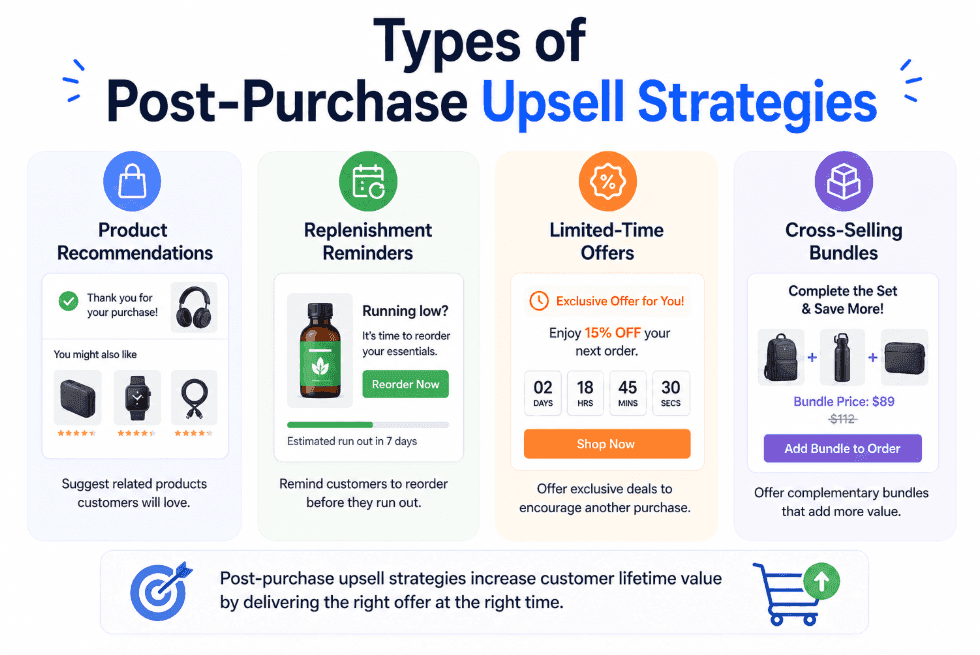
Product Recommendations:Customers receive suggestions for products that are related to what they have already purchased. These recommendations feel natural and relevant.
Replenishment Reminders:For consumable products, automation can remind customers to reorder when the product is likely to run out.
Limited-Time Offers:Special discounts or exclusive deals can be offered shortly after purchase to encourage another order.
Cross-Selling Bundles:Customers can be offered bundles that complement their original purchase and increase overall value.
Benefits of Post-Purchase Upsell Automation
Automating upsell campaigns provides several advantages for businesses.
First, it increases revenue without requiring additional customer acquisition. Businesses can generate more value from their existing customer base.
Second, automation ensures consistency. Every customer receives the same high-quality follow-up experience.
Another important benefit is personalization. Automated systems can tailor recommendations based on customer behavior, making offers more relevant.
Finally, it reduces manual workload for marketing teams while still driving continuous engagement.
Steps to Implement Post-Purchase Upsell Automation
Businesses can start building an effective upsell automation system by following a structured approach.
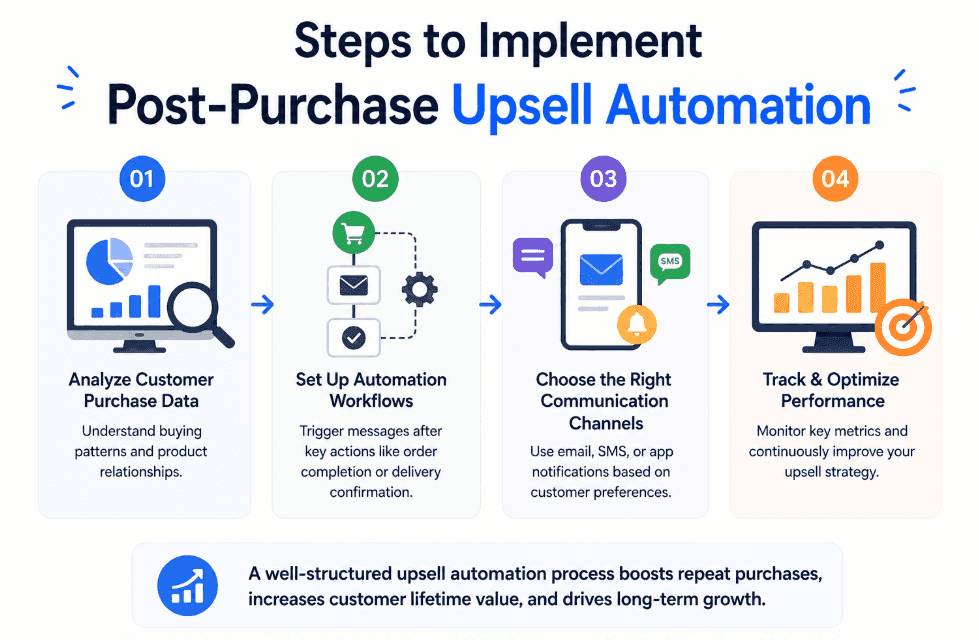
The first step is analyzing customer purchase data to understand buying patterns and product relationships.
Next, companies should set up automation workflows that trigger messages after specific actions, such as order completion or delivery confirmation.
It is also important to choose the right communication channels based on customer preferences, whether email, SMS, or app notifications.
Finally, businesses should track performance metrics such as repeat purchase rate and conversion rates to continuously improve their strategy.
The Future of Post-Purchase Automation
As technology evolves, post-purchase upselling is becoming more advanced. Automation systems are starting to use predictive analytics to anticipate what customers are likely to buy next.
In the future, businesses may deliver highly personalized product suggestions based on real-time behavior and preferences across multiple channels.
This level of automation will allow brands to create seamless customer journeys that extend beyond the initial purchase.
Conclusion
Post-purchase engagement is one of the most valuable opportunities for increasing revenue and building customer loyalty. Ignoring this stage means missing out on repeat sales that could be generated easily.
By implementing Post-Purchase Upsell Automation: Increase Repeat Purchases Automatically, businesses can deliver relevant offers, improve customer experience, and drive consistent growth.
Automation ensures that customers remain engaged even after their first purchase, turning one-time buyers into long-term customers.