Est.2016
→
∞
COD Order Verification Automation: Reduce Fake Orders & RTO
automation

Cash on Delivery (COD) remains one of the most popular payment options in many e-commerce markets. Customers often prefer paying only after receiving their products, which builds trust and encourages more purchases. However, while COD increases order volume, it also brings serious operational challenges for businesses.
One of the biggest problems is fake orders and high Return to Origin (RTO) rates. Many customers place COD orders without the intention of accepting the delivery, while others provide incorrect contact details or addresses. This leads to failed deliveries, wasted shipping costs, and operational inefficiencies.
This is where COD Order Verification Automation: Reduce Fake Orders & RTO becomes extremely valuable. By automating the verification process before shipping an order, businesses can confirm genuine buyers, prevent fraudulent orders, and significantly reduce RTO rates.
What is COD Order Verification Automation?
COD Order Verification Automation refers to the use of automated tools and workflows to verify the authenticity of Cash on Delivery orders before they are processed and shipped.
Instead of manually contacting every customer, automation systems can verify orders through multiple methods such as phone confirmation, OTP verification, or automated calls.
These systems work instantly after an order is placed and confirm whether the customer genuinely intends to receive the product.
A typical automated verification process may include:
Sending an OTP to confirm the customer’s phone number
Automated IVR calls asking the customer to confirm the order.
SMS or WhatsApp verification links
Address validation systems
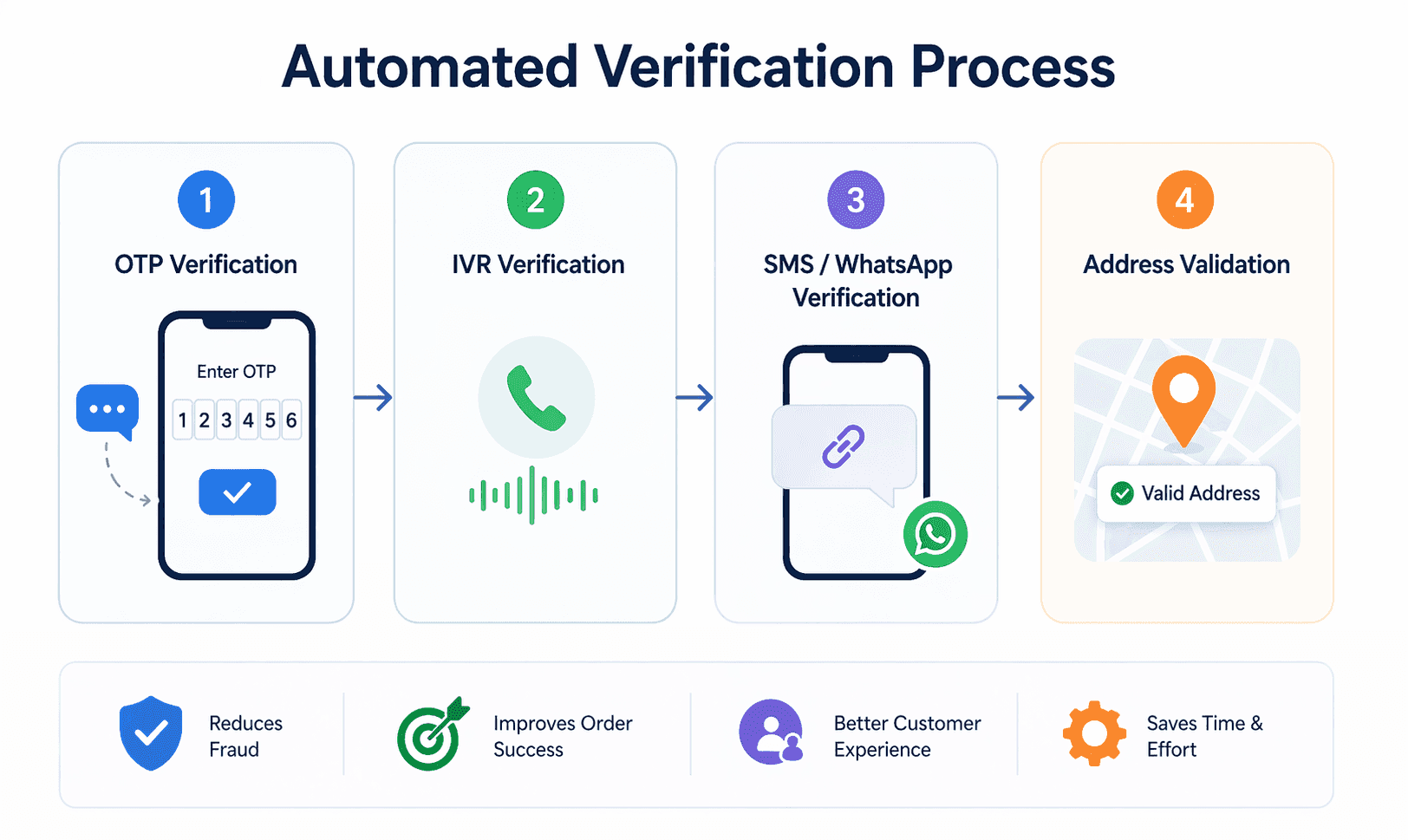
Once the order is verified, it moves forward in the fulfillment process. If the verification fails, the order can be flagged or cancelled automatically.
Why Fake COD Orders Are a Major Problem
Fake COD orders are one of the most costly issues in eCommerce operations. When an order is placed, but the customer refuses to accept it during delivery, the product is returned to the warehouse.
This process is known as Return to Origin (RTO).
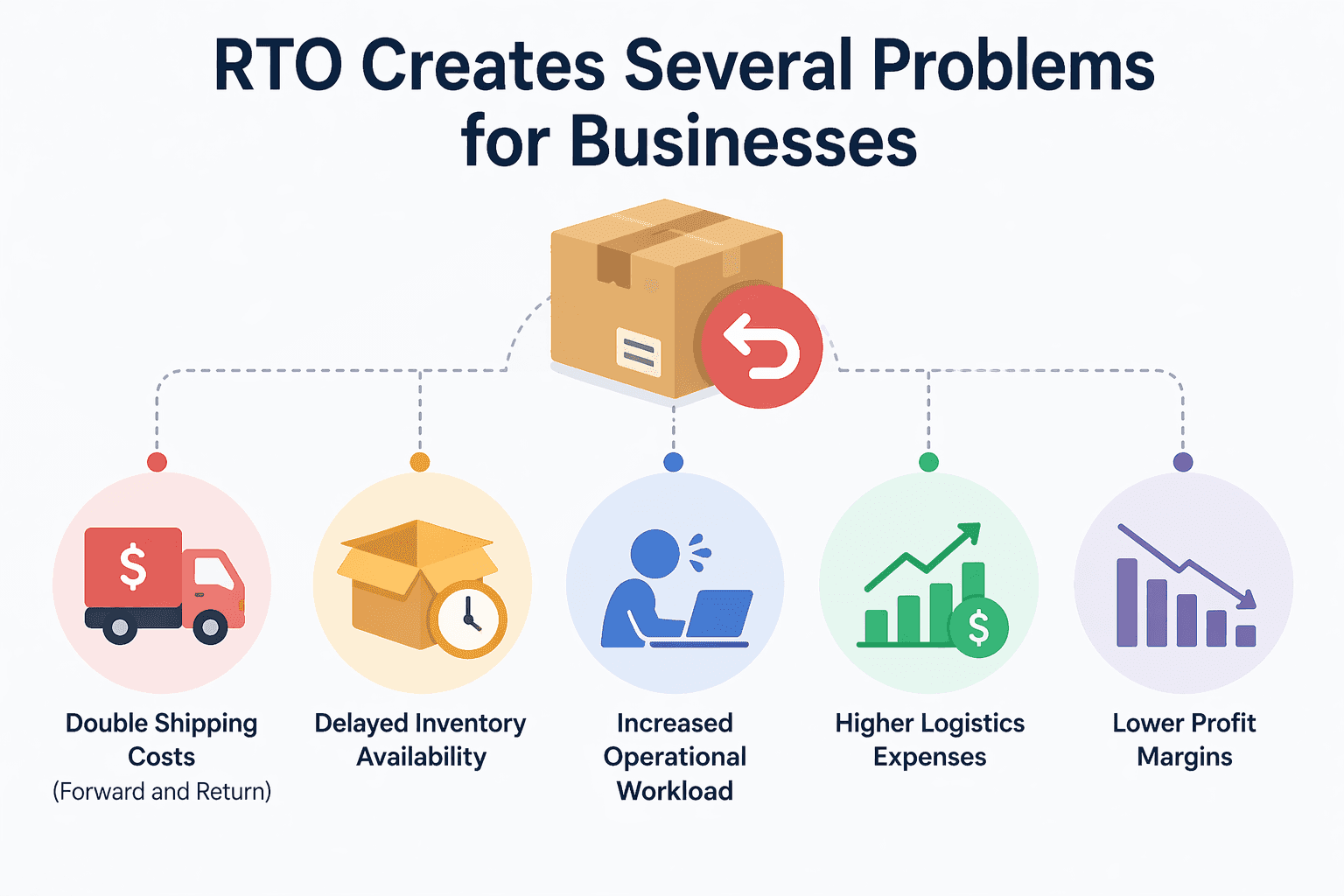
RTO creates several problems for businesses:
Double shipping costs (forward and return)
Delayed inventory availability
Increased operational workload
Higher logistics expenses
Lower profit margins
In some cases, fake orders are intentionally placed to prank sellers or disrupt operations.
Without proper verification systems, businesses often discover these fake orders only after the shipment has already been dispatched.
Automation helps stop these issues before they happen.
How COD Verification Automation Works
Automation tools verify orders immediately after they are placed on the website or marketplace.
The system automatically checks important details such as phone number validity, customer confirmation, and order authenticity.
Here is a simplified workflow of COD order verification automation:
Instant Order Detection:As soon as a COD order is placed, the system identifies it and triggers the verification process.
Automated Customer Confirmation:Customers receive a verification request through SMS, WhatsApp, OTP, or automated calls.
They confirm the order by entering an OTP or pressing a key during the automated call.
Order Validation:If the customer confirms the order successfully, the system marks it as verified and allows the order to proceed for fulfillment.
Flagging Suspicious Orders:If the customer does not respond or fails verification, the order is flagged as risky and can be cancelled or reviewed manually.
This process helps businesses filter out unreliable orders before shipping.
How Automation Helps Reduce RTO
One of the biggest advantages of COD order verification automation is its ability to reduce RTO rates significantly.
When only verified orders are shipped, the chances of delivery refusal decrease drastically.
Automation reduces RTO by:
Confirming customer intent before shipping
Detecting fake phone numbers
Eliminating prank or test orders
Identifying suspicious order patterns
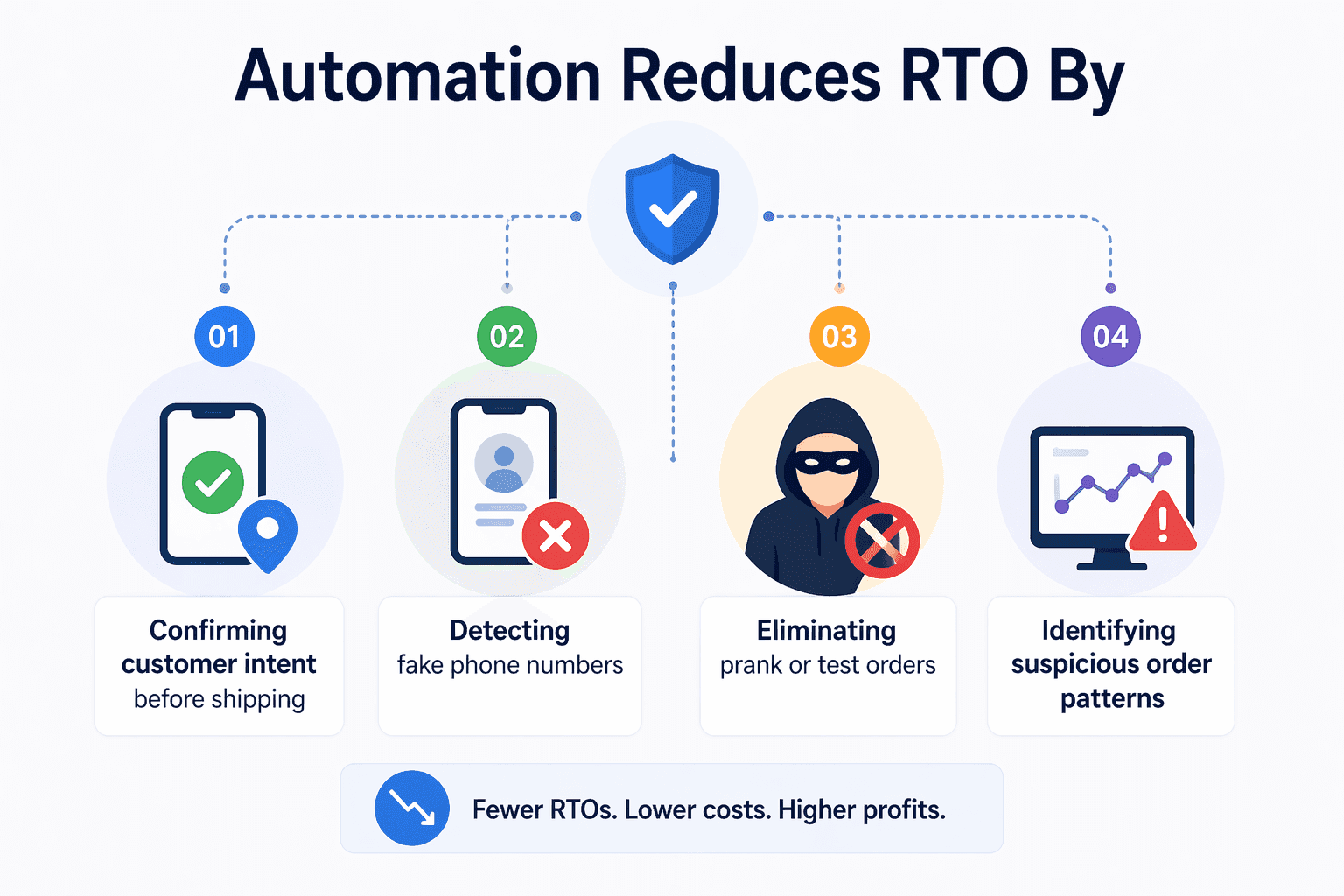
As a result, logistics costs are reduced, and delivery success rates improve.
Benefits of COD Order Verification Automation
Reduced Fake Orders:Automated verification ensures that only genuine customers proceed with their orders.
Lower Return to Origin (RTO) Rates:By confirming orders in advance, businesses can prevent unnecessary returns and delivery failures.
Cost Savings:Reducing fake orders helps businesses avoid additional shipping and logistics costs.
Faster Order Processing:Automation verifies orders instantly, allowing verified orders to move quickly to fulfillment.
Improved Operational Efficiency:Operations teams no longer need to manually verify every COD order, saving time and effort.
Implementing COD Order Verification in eCommerce
Businesses can implement COD verification automation using various tools and technologies. Many modern eCommerce platforms and logistics systems support automated verification features.
Key steps for implementation include:
1. Integrate Verification Tools:Businesses can connect automated verification systems with their e-commerce platform or order management system.
2. Enable Multi-Channel Verification:Verification can be performed through OTP, automated calls, SMS links, or messaging platforms like WhatsApp.
3. Set Verification Rules:Businesses can define rules, such as verifying high-value orders or new customers.
4. Monitor Verification Performance:Tracking verification success rates helps businesses optimize their system and further reduce fake orders.
The Future of COD Fraud Prevention
As online shopping continues to grow, the problem of fake COD orders will likely increase as well.
Advanced technologies such as AI and data analytics are expected to play a bigger role in fraud detection and order verification.
Future systems may analyze customer behavior patterns, purchase history, and delivery success rates to automatically identify risky orders before they are even verified.
Businesses that adopt automation early will be better prepared to manage these challenges efficiently.
Conclusion
COD remains an important payment option for many online shoppers, but it also introduces the risk of fake orders and high RTO rates. Managing these issues manually is difficult and inefficient.
When businesses automate the verification process for COD orders, they can ensure that only genuine buyers are processed, risky orders are filtered out, and delivery success improves significantly.
Automation not only reduces operational costs but also creates a more reliable and scalable order management system for growing eCommerce businesses.