Est.2016
→
∞
The Book Launch Funnel: From Pre-Order to Repeat Buyer
marketing
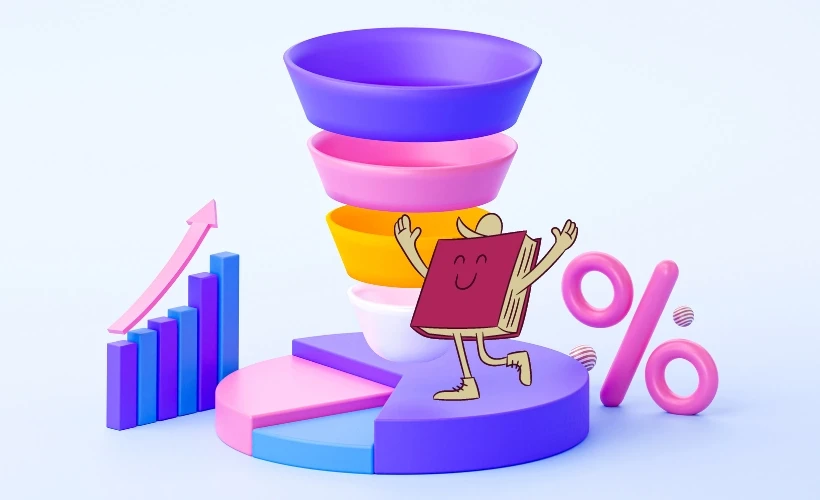
Ask most independent publishers when their launch happens and they will give you a date. That is the problem in one answer. A publication date is a logistics fact. A launch is a sequence, and the date sits somewhere in the middle of it rather than at the start.
Here is the structure that works, stage by stage.
Stage one: audience, three to six months out
Before there is anything to buy, there needs to be somewhere to put interested people. For a book, that is an email list — not a social following, which you rent, but a list you own.
The mechanism is a reason to hand over an address. For non-fiction, an extract of the strongest chapter works better than a generic sample, because the strongest chapter is the argument for the book. For illustrated or photographic titles, a set of high-resolution spreads. For fiction, the first three chapters.
The number that matters at this stage is not list size but engagement. A list of eight hundred people who open consistently will outperform four thousand collected from a giveaway that had nothing to do with your subject.
Stage two: pre-order, six to eight weeks out
Pre-orders do two things. They give you a real revenue signal before the print run is committed, and they concentrate sales into a narrow window, which is what retail charts and algorithms respond to.
Do not just announce that pre-orders are open. Give the pre-order period something the later purchase does not have: a numbered first printing, a signed bookplate, a name in the back matter, an inclusion in a print draw. The offer has to be genuinely unavailable afterwards or you have trained your list to wait.
Email cadence through this window is roughly: announcement, then a content email that stands on its own merits, then a specifics email covering format, paper, size, extent, then a closing email when the pre-order incentive ends. Four emails over six weeks. Nobody unsubscribes over that.
Stage three: publication week
The purpose of publication week is concentration. Everything you have — list, any press coverage, any author platform, any paid budget — points at the same seven days.
If you are running paid, this is the week to run it. Retarget everyone who visited the book page and did not buy. Run a small prospecting campaign against your best-performing subject interest. Keep the creative unambiguous: the object, the price, the format, and a single link to your own product page rather than a general homepage.
Stage four: the part everyone skips
The month after publication is where independent publishers leave most of their money. A buyer who has just received a book from you is the warmest audience you will ever have, and almost nobody emails them.
Three things belong here. A post-delivery email that asks nothing except whether the book arrived in good condition — this catches damage complaints before they become public reviews. A review request roughly ten days later, with a direct link, phrased as a favour rather than a demand. And a related-title recommendation once the book has been read, which is the moment a subject-list buyer is most receptive to the neighbouring subject.
The number that decides everything
The metric worth building your marketing around is not cost per acquisition on a single title. It is the proportion of buyers who buy a second book from you.
A publisher where twenty per cent of buyers return can afford to acquire a first-time customer at close to break-even, because the second purchase carries no acquisition cost. A publisher where nobody returns has to make every campaign profitable in isolation, which on a £20 product with print and shipping costs is close to impossible.
That repeat rate is not a marketing tactic. It is a consequence of list coherence — whether your books make sense next to each other on a shelf. If a buyer of one title has no obvious reason to want another, no funnel design will fix it.