Est.2016
→
∞
AI Sales Agent Automation: Replace Manual Follow-Ups Completely
automation

Follow-ups are one of the most critical parts of any sales process. They are also one of the most neglected.
A lead shows interest, maybe even replies once, and then silence. In many cases, the deal does not fall through because the prospect was not interested. It happens because the follow-up never came, or it came too late.
This is where AI sales agent automation is creating a major shift. Instead of relying on manual reminders and inconsistent outreach, businesses can now build systems that handle follow-ups automatically, intelligently, and at scale.
The result is simple. No missed opportunities, better engagement, and more deals moving forward.
Why Manual Follow-Ups Break Down
On paper, follow-ups sound easy. In reality, they are difficult to manage consistently.
Sales teams are often juggling multiple conversations at once. New leads keep coming in, existing deals require attention, and priorities keep shifting. In this environment, it is easy for follow-ups to slip.
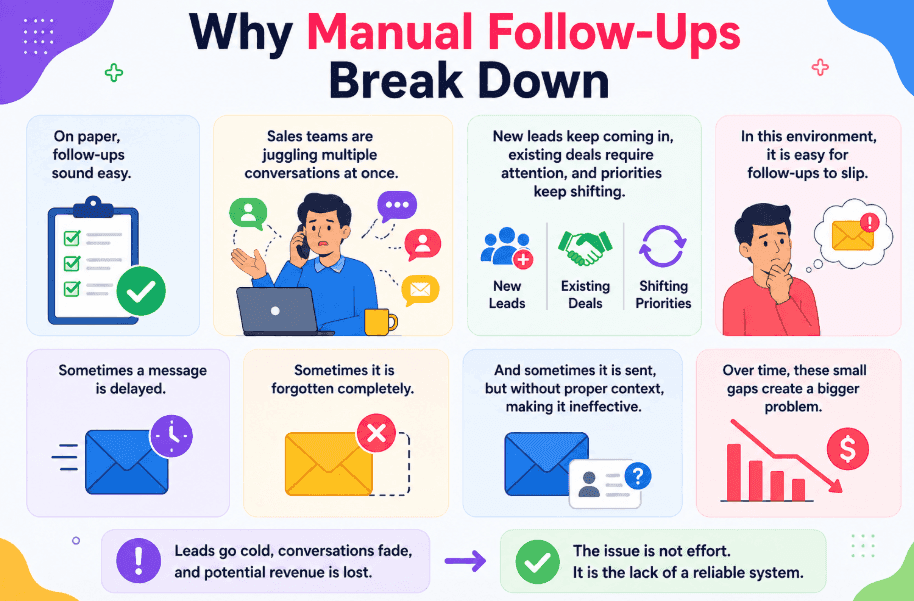
Sometimes a message is delayed. Sometimes it is forgotten completely. And sometimes it is sent, but without proper context, making it ineffective.
Over time, these small gaps create a bigger problem. Leads go cold, conversations fade, and potential revenue is lost.
The issue is not effort. It is the lack of a reliable system.
What an AI Sales Agent Actually Does
An AI sales agent is not just a chatbot sending generic replies. It is a system designed to manage conversations, track interactions, and respond based on context.
From the moment a lead enters your pipeline, the AI agent can start engaging. It can send initial responses, ask relevant questions, and most importantly, handle follow-ups automatically.
If a prospect does not reply, the system knows when to reach out again. If they show interest, it can guide them toward the next step, whether that is booking a call or requesting more information.
Everything happens without manual intervention, but still feels structured and intentional.
Turning Follow-Ups Into a Structured Process
The biggest advantage of automation is consistency.
Instead of relying on memory or manual tracking, every lead follows a defined sequence. Messages are sent at the right time, with the right context, based on previous interactions.

For example, if a prospect opens a message but does not respond, the system can trigger a follow-up after a specific interval. If they click on a link, the next message can be adjusted to reflect that interest.
This kind of structured flow ensures that every opportunity is handled properly. No lead is ignored, and no conversation is left incomplete.
Personalization Without Extra Effort
One of the concerns with automation is that it can feel robotic. But modern AI systems are designed to avoid that.
By using data from previous interactions, as well as enriched lead information, AI agents can create messages that feel personal and relevant.
Instead of sending the same follow-up to everyone, the system adapts its messaging. It references earlier conversations, acknowledges responses, and maintains a natural tone.
This makes the interaction feel less like automation and more like a real conversation.
Faster Responses, Better Engagement
Timing plays a crucial role in sales. A quick response can keep a conversation alive, while a delay can cause it to fade.
AI sales agents operate continuously. They do not depend on working hours or availability. This means every lead gets immediate attention, regardless of when they engage.
Faster responses lead to higher engagement. Prospects feel heard, and the conversation progresses more smoothly.
This alone can have a significant impact on conversion rates.
Reducing Workload Without Losing Control
Automation does not mean losing control over your sales process. In fact, it gives you more visibility.
With an AI sales agent in place, you can track every interaction, see where leads are in the pipeline, and step in when needed. Your team is still involved, but they are no longer burdened with repetitive tasks.
Instead of spending time sending reminders or drafting follow-ups, they can focus on high-value conversations and closing deals.
This shift improves efficiency without compromising quality.
Common Mistakes to Avoid
While AI sales agent automation is powerful, it needs to be implemented carefully.
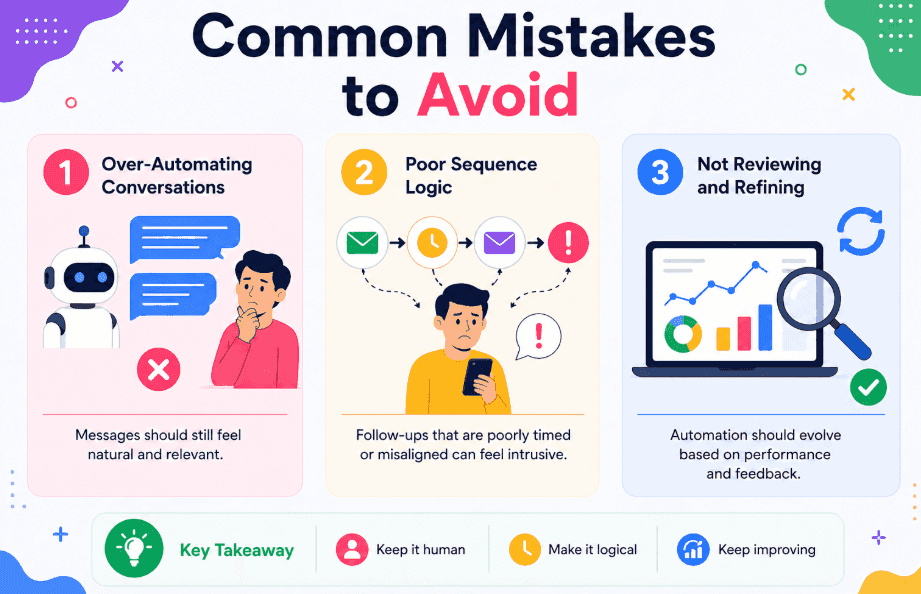
One common mistake is over-automating conversations to the point where they lose their human touch. Messages should still feel natural and relevant.
Another issue is setting up sequences without proper logic. If follow-ups are poorly timed or not aligned with the conversation, they can feel intrusive.
It is also important to regularly review and refine your system. Automation should evolve based on performance and feedback.
The Impact on Sales Performance
When follow-ups are handled consistently, the entire sales process improves.
Leads stay engaged for longer. Conversations progress more smoothly. And more opportunities reach the closing stage.
At the same time, the workload on your team decreases. They are no longer chasing every lead manually, which allows them to focus on strategy and relationship building.
This combination of efficiency and effectiveness creates a strong foundation for growth.
Final Thoughts
Follow-ups are not just a small part of the sales process. They are often the difference between a lost lead and a closed deal.
AI sales agent automation ensures that this critical step is never overlooked. It brings structure, consistency, and intelligence to every interaction.
By replacing manual follow-ups with a well-designed system, businesses can improve engagement, reduce workload, and increase conversions.
In a competitive environment, where timing and relevance matter more than ever, this kind of automation is no longer optional. It is becoming a key part of how modern sales teams operate.